
Goodbye, cavities? Scientists create gel that could regrow tooth enamel
- Date:
- November 5, 2026
- Source:
- University of Nottingham
- Summary:
- Scientists have developed a revolutionary gel that could regrow lost tooth enamel by harnessing minerals naturally found in saliva, potentially overcoming one of dentistry’s biggest limitations. The regenerated enamel behaves much like healthy enamel, raising hopes for a simple treatment that could repair damaged teeth, prevent decay, and reduce sensitivity.
- Share:
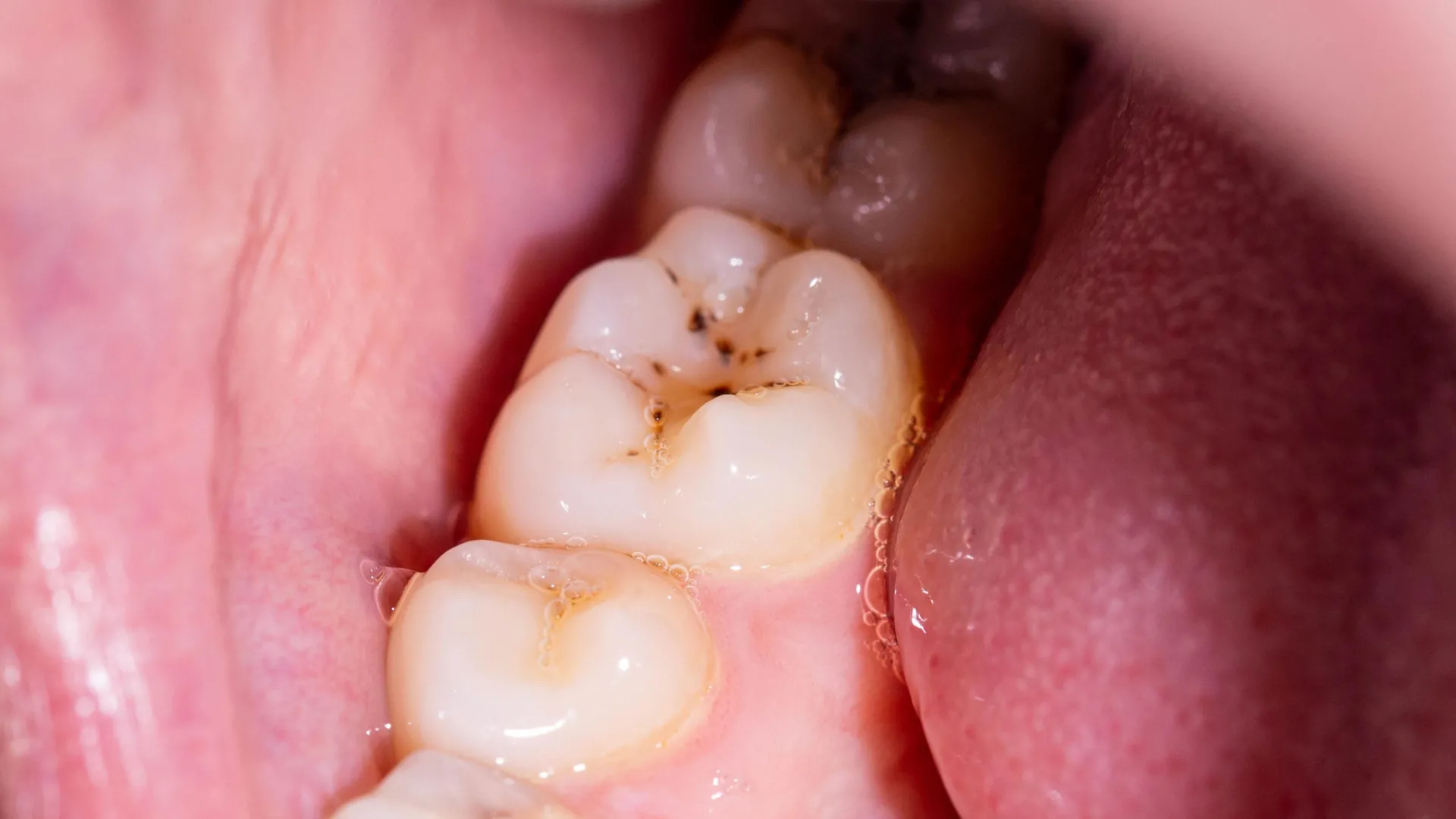
Scientists have developed a new gel that could make it possible to regrow damaged tooth enamel, potentially overcoming one of the biggest limitations in dental care. Unlike bones and many other tissues in the body, tooth enamel cannot naturally regenerate once it has been lost. The new treatment offers a promising way to rebuild this protective layer, strengthen teeth, and help prevent future decay.
The innovation comes from researchers at the University of Nottingham's School of Pharmacy and Department of Chemical and Environmental Engineering. Their new material is inspired by the biological processes that form tooth enamel during early childhood. It is designed to repair enamel that has been weakened by mineral loss or worn away by erosion, while also reinforcing enamel that remains healthy.
The findings, published in Nature Communications, could pave the way for a new generation of dental treatments that go beyond protecting existing enamel and actually help restore its structure.
How the New Gel Regrows Tooth Enamel
One of the most promising features of the technology is its simplicity. Dentists could apply the gel directly to teeth using a procedure similar to existing fluoride treatments, making it potentially easy to incorporate into routine dental care.
Unlike conventional fluoride products, however, the new gel contains no fluoride. Instead, it uses a material made from proteins that imitates important characteristics of the natural proteins responsible for guiding enamel formation when teeth first develop.
Once applied, the gel forms a thin but durable coating that penetrates the tooth's surface and fills microscopic cracks and gaps. This coating then provides a framework for rebuilding the mineral structure of enamel.
The process relies on calcium and phosphate ions, two essential mineral components naturally present in saliva. The gel attracts these minerals and helps organize them into new crystals that grow in an orderly pattern.
Scientists call this process epitaxial mineralization. Essentially, it means that new mineral crystals grow in alignment with the existing enamel, allowing the newly formed material to become structurally integrated with the original tooth surface.
This organization is especially important because enamel gets its exceptional hardness and durability from the precise arrangement of its mineral crystals. Simply depositing minerals on a tooth is not enough to recreate the complex structure that makes natural enamel so effective.
By guiding crystal growth, the new gel can restore both the microscopic architecture and the physical properties of healthy enamel.
A Potential Solution for Tooth Sensitivity and Decay
The researchers also discovered that their material can be used on exposed dentine, commonly called dentin in the United States. Dentin is the layer of tooth tissue beneath the enamel. It is softer than enamel and contains tiny channels that can transmit sensations toward the nerves inside the tooth.
When enamel wears away, or gums recede, exposed dentin can make teeth particularly sensitive to hot, cold, sweet, or acidic foods and drinks.
The new gel can encourage the formation of an enamel-like mineral layer over exposed dentin. This could help reduce tooth sensitivity while also improving the attachment of dental restorations, such as fillings and other treatments used to repair damaged teeth.
The potential benefits are significant. Enamel deterioration is a major factor in tooth decay and contributes to dental problems that affect nearly half of the world's population. These conditions can cause pain, infections, and eventually tooth loss. Poor oral health is also associated with broader health problems, including diabetes and cardiovascular disease.
One of the greatest challenges in dentistry is that enamel has no living cells capable of rebuilding it after teeth have fully developed. Although saliva can naturally replace some minerals lost during the earliest stages of enamel damage, the body cannot regenerate substantial amounts of enamel that have been worn away.
Existing treatments, including fluoride varnishes and remineralization products, can help protect teeth and repair early mineral loss. However, they cannot fully reconstruct enamel that has already been lost.
The new technology aims to overcome that limitation by encouraging the formation of new mineral tissue with properties resembling those of the original enamel.
Regenerated Enamel Performs Like Natural Tooth Enamel
The research team tested the mechanical strength and durability of the regenerated material under conditions designed to mimic everyday use.
These experiments examined how the newly formed enamel responded to activities and exposures that teeth routinely experience, including brushing, chewing, and contact with acidic foods.
The results were encouraging. According to the researchers, the regenerated enamel displayed mechanical properties comparable to those of healthy natural enamel, suggesting that the material could provide more than a temporary protective coating.
Dr. Abshar Hasan, a postdoctoral fellow and the study's lead author, explained why recreating enamel's internal structure is so important.
"Dental enamel has a unique structure, which gives enamel its remarkable properties that protect our teeth throughout life against physical, chemical, and thermal insults. When our material is applied to demineralized or eroded enamel, or exposed dentine, the material promotes the growth of crystals in an integrated and organized manner, recovering the architecture of our natural healthy enamel. We have tested the mechanical properties of these regenerated tissues under conditions simulating 'real-life situations' such as tooth brushing, chewing, and exposure to acidic foods, and found that the regenerated enamel behaves just like healthy enamel."
These findings suggest that the gel could eventually offer a way to restore the strength and protective function of damaged enamel rather than simply slowing further deterioration. However, the laboratory results do not yet establish how well the treatment will perform over extended periods in patients.
A New Era of Tooth Enamel Repair?
Beyond its ability to regenerate enamel, the researchers emphasize that the technology was developed with practical dental applications in mind.
The gel is designed to be safe, simple to apply, and suitable for manufacturing on a larger scale. Its versatility could also allow it to be incorporated into several types of dental products, potentially benefiting patients of different ages with enamel erosion, tooth sensitivity, or other problems involving exposed dentin.
Professor Alvaro Mata, Chair in Biomedical Engineering & Biomaterials at the University of Nottingham, led the study and highlighted the potential for translating the discovery into products that dentists can use.
"We are very excited because the technology has been designed with the clinician and patient in mind. It is safe, can be easily and rapidly applied, and it is scalable. Also, the technology is versatile, which opens the opportunity to be translated into multiple types of products to help patients of all ages suffering from a variety of dental problems associated with loss of enamel and exposed dentine. We have started this process with our start-up company Mintech-Bio and hope to have a first product out by next year; this innovation could soon be helping patients worldwide."
The researchers have already begun working toward commercialization through their company, Mintech-Bio, with the goal of introducing an initial product as early as the year following the announcement.
Although further development and clinical validation will be important before the technology becomes an established dental treatment, its ability to recreate the structure and strength of natural enamel represents a promising advance.
If the approach proves successful in patients, it could fundamentally change how dentists address enamel loss, opening the possibility of rebuilding tooth surfaces that previously could only be protected or restored using conventional dental materials.
Story Source:
Materials provided by University of Nottingham. Note: Content may be edited for style and length.
Journal Reference:
- Abshar Hasan, Andrey Chuvilin, Alexander Van Teijlingen, Helena Rouco, Christopher Parmenter, Federico Venturi, Michael Fay, Gabriele Greco, Nicola M. Pugno, Jan Ruben, Charlotte J. C. Edwards-Gayle, Benjamin Myers, Ingrid Dreveny, Nathan Cowieson, Adam Winter, Sara Gamea, X. Frank Walboomers, Tanvir Hussain, José Carlos Rodríguez-Cabello, Frankie Rawson, Tell Tuttle, Sherif Elsharkawy, Avijit Banerjee, Stefan Habelitz, Alvaro Mata. Biomimetic supramolecular protein matrix restores structure and properties of human dental enamel. Nature Communications, 2025; 16 (1) DOI: 10.1038/s41467-025-64982-y
Cite This Page: