
Low dose melanoma treatment delivers dramatically better results
- Date:
- December 8, 2025
- Source:
- Karolinska Institutet
- Summary:
- Using less ipilimumab appears to make melanoma immunotherapy both safer and more effective, with dramatically better response and survival outcomes. The findings suggest that reducing side effects may be the key to maximizing the benefits of these powerful treatments.
- Share:
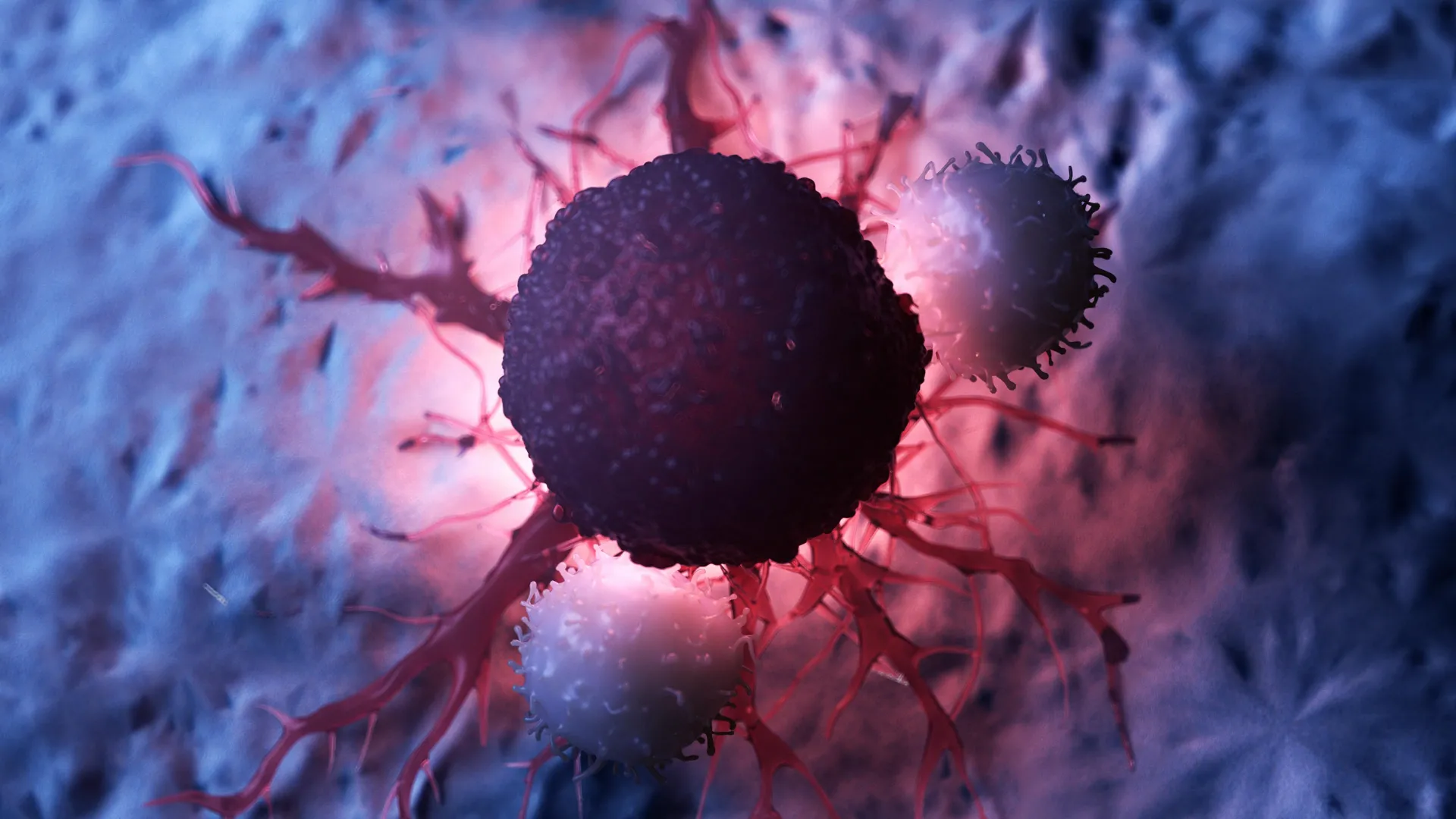
A recent study reports that using reduced amounts of approved immunotherapy for malignant melanoma may lead to better control of tumors while also limiting side effects. The findings come from researchers at Karolinska Institutet and were published in the Journal of the National Cancer Institute.
"The results are highly interesting in oncology, as we show that a lower dose of an immunotherapy drug, in addition to causing significantly fewer side effects, actually gives better results against tumors and longer survival," says last author Hildur Helgadottir, a researcher at the Department of Oncology-Pathology at Karolinska Institutet, who led the study.
Why Sweden Uses a Modified Treatment Approach
Standard treatment for malignant melanoma typically relies on the approved doses of nivolumab and ipilimumab. However, because the full-dose combination often leads to considerable side effects, Swedish clinicians have increasingly adopted a regimen that uses a reduced amount of ipilimumab. This component is both the most expensive part of the treatment and the one most strongly linked to side effects.
"In Sweden, we have greater freedom to choose doses for patients, while in many other countries, due to reimbursement policies, they are restricted by the doses approved by the drug authorities," says Hildur Helgadottir.
Improved Responses and Survival With Reduced Ipilimumab
Nearly 400 people with advanced, inoperable malignant melanoma took part in the study, which focused on this severe form of skin cancer. According to the results, patients receiving the lower-ipilimumab regimen showed stronger responses. A total of 49 percent of these patients responded to treatment, compared to 37 percent in the group that received the traditional dose.
Progression-free survival, defined as the time a patient lives without the disease getting worse, reached a median of nine months for the lower-dose group. The traditional-dose group experienced a median of three months. Overall survival also differed significantly, with medians of 42 months and 14 months, respectively.
Reduced Side Effects May Allow Longer Treatment
Serious side effects appeared in 31 percent of people treated with the lower dose, compared to 51 percent among those given the standard regimen.
"The new immunotherapies are very valuable and effective, but at the same time they can cause serious side effects that are sometimes life-threatening or chronic. Our results suggest that this lower dosage may enable more patients to continue the treatment for a longer time, which is likely to contribute to the improved results and longer survival," says Hildur Helgadottir.
Study Limitations and Research Collaboration
Although some differences existed between the treatment groups, the advantage of the lower-dose approach remained even after accounting for several factors, including age and tumor stage. Because this was a retrospective observational study, the research cannot conclusively prove that the lower dose directly caused the improved outcomes.
The work was carried out together with the Sahlgrenska Comprehensive Cancer Center at Sahlgrenska University Hospital and received funding from the Cancer Foundation, Region Stockholm, and the Radiumhemmet Research Fund.
Story Source:
Materials provided by Karolinska Institutet. Note: Content may be edited for style and length.
Journal Reference:
- Karl Björkström, Cissi Liu, Anna Fager, Lisa L Liu, Lars Ny, Hildur Helgadottir. Evaluation of the flipped dose NIVO3 IPI1 in patients with advanced unresectable melanoma. JNCI: Journal of the National Cancer Institute, 2025; DOI: 10.1093/jnci/djaf327
Cite This Page: