
Scientists uncover the hidden survival trick that lets cancer bounce back
- Date:
- December 10, 2025
- Source:
- University of California - San Diego
- Summary:
- Scientists discovered that certain cancer cells use a low-level activation of a DNA-dismantling enzyme—normally seen in cell death—to survive treatment. Instead of dying, these “persister cells” leverage this sublethal signal to regrow. Because the mechanism is non-genetic, it appears much earlier than typical resistance mutations. Targeting this enzyme could help stop tumors from returning.
- Share:
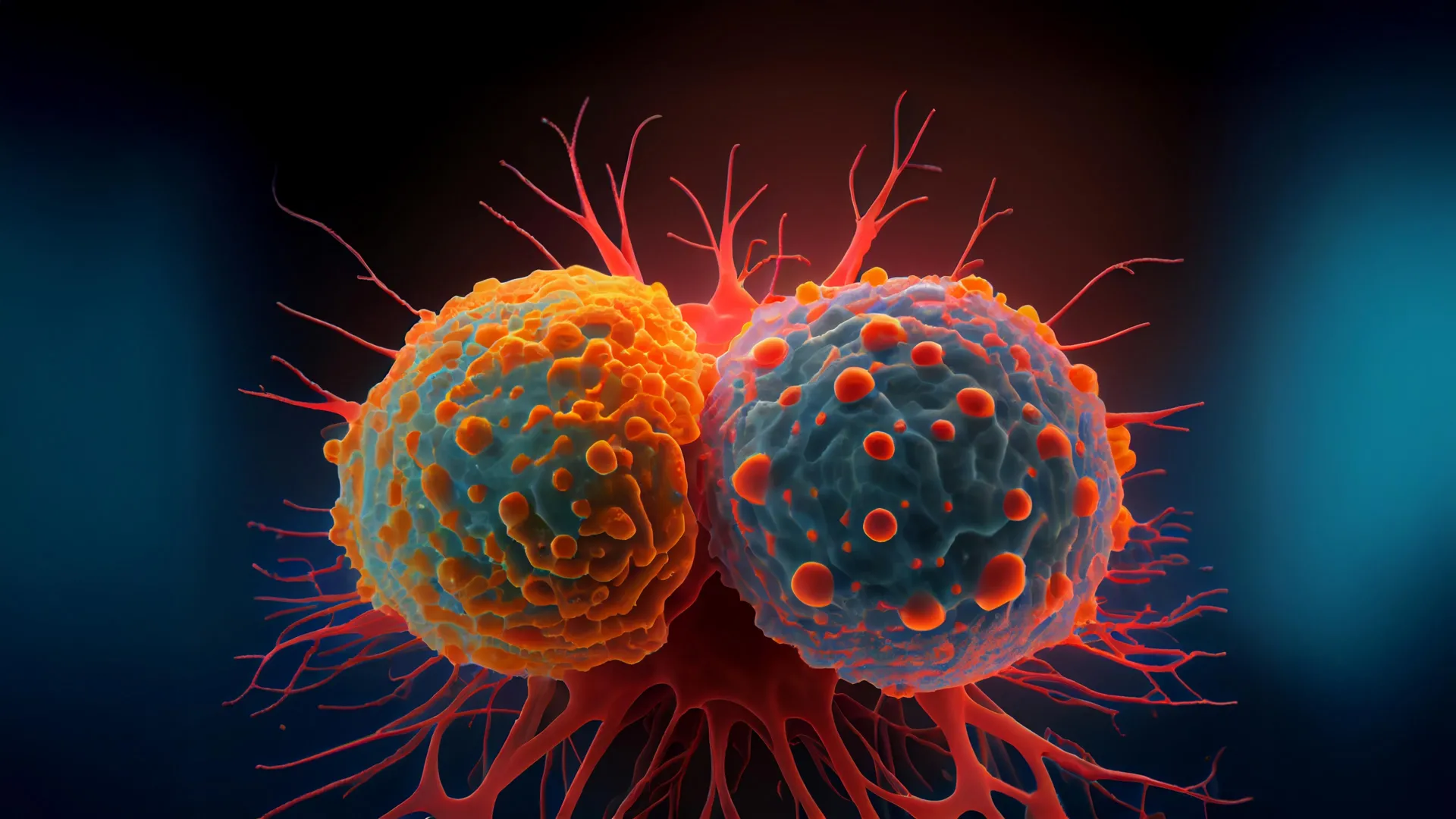
Cancer drug resistance remains one of the biggest challenges in cancer treatment, and doctors urgently need better ways to prevent it. Yet scientists still do not fully understand the molecular processes that allow tumors to escape and return after therapy, which slows the development of new strategies to stop resistance. Researchers at the University of California San Diego have now identified an unexpected survival strategy that cancer cells use to endure and grow back after targeted therapy: they co-opt an enzyme that is normally active only during cell death.
"This flips our understanding of cancer cell death on its head," said senior author Matthew J. Hangauer, Ph.D., assistant professor of dermatology at UC San Diego School of Medicine and Moores Cancer Center member. "Cancer cells which survive initial drug treatment experience sublethal cell death signaling which, instead of killing the cell, actually helps the cancer regrow. If we block this death signaling within these surviving cells, we can potentially stop tumors from relapsing during therapy."
Global cancer burden and early resistance
Cancer is responsible for about one in six deaths worldwide. Many of these deaths occur because tumors initially respond to treatment, then later acquire resistance and come back. Typically, resistance develops over months to years through new mutations, much like bacteria gradually evolving resistance to antibiotics. These mutation-driven changes are hard to manage with the limited number of drug combinations available.
The newly identified mechanism, however, operates at the very beginning of resistance and does not depend on genetic mutations. Because it appears so early and is not tied to permanent changes in DNA, it represents a promising new point of attack for future therapies.
"Most research on resistance focuses on genetic mutations," said first author August F. Williams, Ph.D., a postdoctoral fellow in the Hangauer lab at UC San Diego. "Our work shows that non-genetic regrowth mechanisms can come into play much earlier, and they may be targetable with drugs. This approach could help patients stay in remission longer and reduce the risk of recurrence."
Persister cells, death enzymes and tumor relapse
In the new study, the researchers found:
- In models of melanoma, lung and breast cancers, a subset of "persister" cells that survive treatment showed ongoing, low-level activation of a protein involved in normal cell death that breaks down DNA, called DNA fragmentation factor B (DFFB).
- The level of DFFB activation was too low to kill these cells, but high enough to disrupt how they respond to signals that would normally keep their growth in check.
- When this protein was removed, persister cancer cells stayed dormant and did not regrow during drug treatment.
- DFFB is not required in normal cells, but is necessary for regrowth of cancer persister cells, which marks it as a promising target for combination therapies designed to prolong responses to targeted treatments.
Study publication and research support
The findings were reported in Nature Cell Biology and were supported in part by grants from the Department of Defense, the National Institutes of Health and the American Cancer Society. Hangauer is a cofounder, consultant and research funding recipient of BridgeBio subsidiary Ferro Therapeutics.
Story Source:
Materials provided by University of California - San Diego. Note: Content may be edited for style and length.
Journal Reference:
- August F. Williams, David A. G. Gervasio, Claire E. Turkal, Anna E. Stuhlfire, Michael X. Wang, Brandon E. Mauch, Rhea Plawat, Ariel H. Nguyen, Michelle H. Paw, Mehrshad Hairani, Cooper P. Lathrop, Sophie H. Harris, Jennifer L. Page, Matthew J. Hangauer. DNA fragmentation factor B suppresses interferon to enable cancer persister cell regrowth. Nature Cell Biology, 2025; DOI: 10.1038/s41556-025-01810-x
Cite This Page: