
Harvard gut discovery could change how we treat obesity and diabetes
Gut-microbiome metabolites may hold the key to new treatments for obesity and type 2 diabetes.
- Date:
- December 14, 2025
- Source:
- Fundação de Amparo à Pesquisa do Estado de São Paulo
- Summary:
- Scientists found that certain molecules made by gut bacteria travel to the liver and help control how the body uses energy. These molecules change depending on diet, genetics, and shifts in the microbiome. Some even improved insulin response in liver cells when tested in the lab. The findings could open the door to new ways of preventing or managing obesity and diabetes.
- Share:
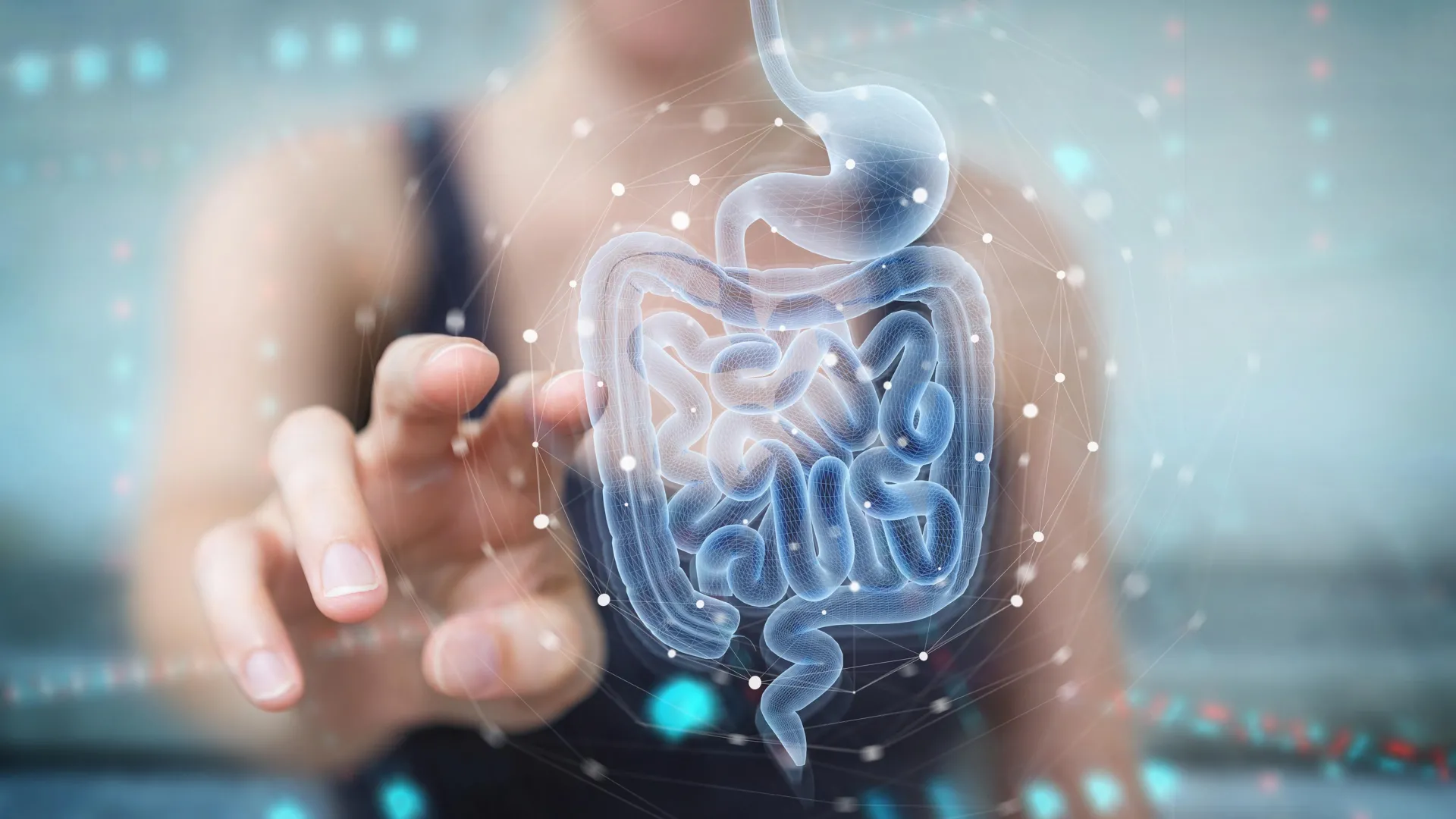
A research project supported by FAPESP and carried out at Harvard University in the United States has identified a set of metabolites that move from the intestine to the liver and then on to the heart, which distributes them throughout the body. These circulating compounds appear to influence how metabolic pathways function within the liver and how sensitive the body is to insulin. The findings point to potential new strategies for treating obesity and type 2 diabetes. The study was published in Cell Metabolism.
"The hepatic portal vein drains much of the blood from the intestine to the liver. Therefore, it's the first place to receive products from the gut microbiome. In the liver, they can be conjugated, transformed, or eliminated, and then enter the systemic circulation," explains Vitor Rosetto Muñoz, first author of the study and postdoctoral researcher at the Ribeirão Preto School of Physical Education and Sports at the University of São Paulo (EEFERP-USP) in Brazil.
"By analyzing the blood leaving the intestine and the peripheral blood circulating throughout the body, we were able to more accurately observe the enrichment of these metabolites derived from the gut microbiome in each location and, consequently, how they can modify hepatic metabolism and metabolic health," adds Muñoz. He completed this work during an internship at the Joslin Diabetes Center at Harvard Medical School in the United States with support from a FAPESP scholarship under the guidance of researcher Carl Ronald Kahn.
Gut Microbiome Diversity and Metabolic Disease Risk
Over the past several years, scientists have increasingly recognized that the gut microbiome acts as a key link between genetics, environmental factors, and the development of metabolic disorders. Studies have shown that people and animals with obesity, type 2 diabetes, glucose intolerance, or insulin resistance often have distinct gut microbial compositions compared to those without these conditions.
Even so, researchers still struggle to determine which specific bacteria or microbial products drive these differences or how they interact with intestinal tissues. To explore this question, the recently published study examined metabolites in the blood of mice that varied in their susceptibility to obesity and diabetes. Samples were taken from the hepatic portal vein, which carries blood from the intestine to the liver, and from peripheral blood, which travels from the liver to the heart before circulating through the body.
"Normally, studies tend to look at metabolites present in fecal material or peripheral blood, but they don't accurately reflect what's first reaching the tissue of the liver, which is an important metabolic organ linked to different diseases," says the researcher.
Environmental and Genetic Effects on Metabolite Profiles
In healthy mice, the team detected 111 metabolites enriched in the hepatic portal vein and 74 in peripheral blood. When mice genetically predisposed to obesity and type 2 diabetes were fed a hyperlipidemic diet (rich in fat), the number of metabolites enriched in the hepatic portal vein dropped from 111 to 48. This finding indicates that environmental factors, such as diet, can strongly influence the distribution of these compounds.
The metabolite profiles in these susceptible mice also differed from those observed in a strain of mice naturally resistant to metabolic syndrome. This contrast suggests that genetic background plays a central role in shaping which metabolites appear in the hepatic portal vein.
"This shows that both the environment and the host's genetics can interact in complex ways with the gut microbiome. As a result of these interactions, different combinations of metabolites may be sent to the liver and subsequently to the peripheral circulation. These metabolites likely play an important role in mediating the conditions that lead to obesity, diabetes, and metabolic syndrome," says Muñoz.
Testing Microbiome Disruption and Metabolite Effects
To identify which bacteria and microbial byproducts contribute to these metabolite patterns, the researchers treated obesity and diabetes susceptible mice with an antibiotic designed to target specific intestinal microorganisms. As expected, the treatment altered the microbiome and changed the balance of metabolites in both peripheral blood and the hepatic portal vein.
One outcome was an increase in metabolites such as mesaconate, which participates in the Krebs cycle, a fundamental energy-producing pathway in cells.
Using this insight, the scientists exposed hepatocytes (liver cells) to mesaconate and its isomers, which are chemical compounds with the same molecular formula but different structures. The treatments improved insulin signaling and regulated genes involved in hepatic fat accumulation (lipogenesis) and fatty acid oxidation, both of which are crucial processes for maintaining metabolic health.
"The metabolites found in the blood of these two sites, therefore, play important roles in mediating the effects of the microbiome on liver metabolism and the pathogenesis of type 2 diabetes insulin resistance, which is related to eating a high-fat diet," says Muñoz.
Next Steps in Mapping Gut Driven Metabolic Pathways
The scientists now aim to characterize each metabolite in greater detail and determine how they are produced. This deeper understanding of microbial influences on metabolism may eventually lead to the identification of molecules that could serve as new therapeutic options for metabolic diseases.
Story Source:
Materials provided by Fundação de Amparo à Pesquisa do Estado de São Paulo. Note: Content may be edited for style and length.
Journal Reference:
- Vitor Rosetto Muñoz, Francois Moreau, Marion Soto, Yoshiyuki Watanabe, Loc-Duyen Pham, Jimmy Zhong, Sam Zimmerman, Bruna B. Brandao, Khyati Girdhar, Julian Avila, Hui Pan, Jonathan M. Dreyfuss, Michael Y. Mi, Robert E. Gerszten, Emrah Altindis, Aleksandar Kostic, Clary B. Clish, C. Ronald Kahn. Portal vein-enriched metabolites as intermediate regulators of the gut microbiome in insulin resistance. Cell Metabolism, 2025; 37 (10): 2048 DOI: 10.1016/j.cmet.2025.08.005
Cite This Page: