
Scientists found a gut compound that helps protect the liver
- Date:
- February 8, 2026
- Source:
- University of Oklahoma
- Summary:
- What a mother eats during pregnancy may quietly shape her child’s liver health years down the road—but new research suggests there may be a way to tip the odds back in a healthier direction. Scientists found that a natural compound made by healthy gut bacteria dramatically reduced fatty liver disease in the offspring of mice whose mothers ate a high-fat, high-sugar diet. The compound, called indole, appeared to protect the liver, improve blood sugar, limit weight gain, and even reshape the gut microbiome in lasting ways.
- Share:
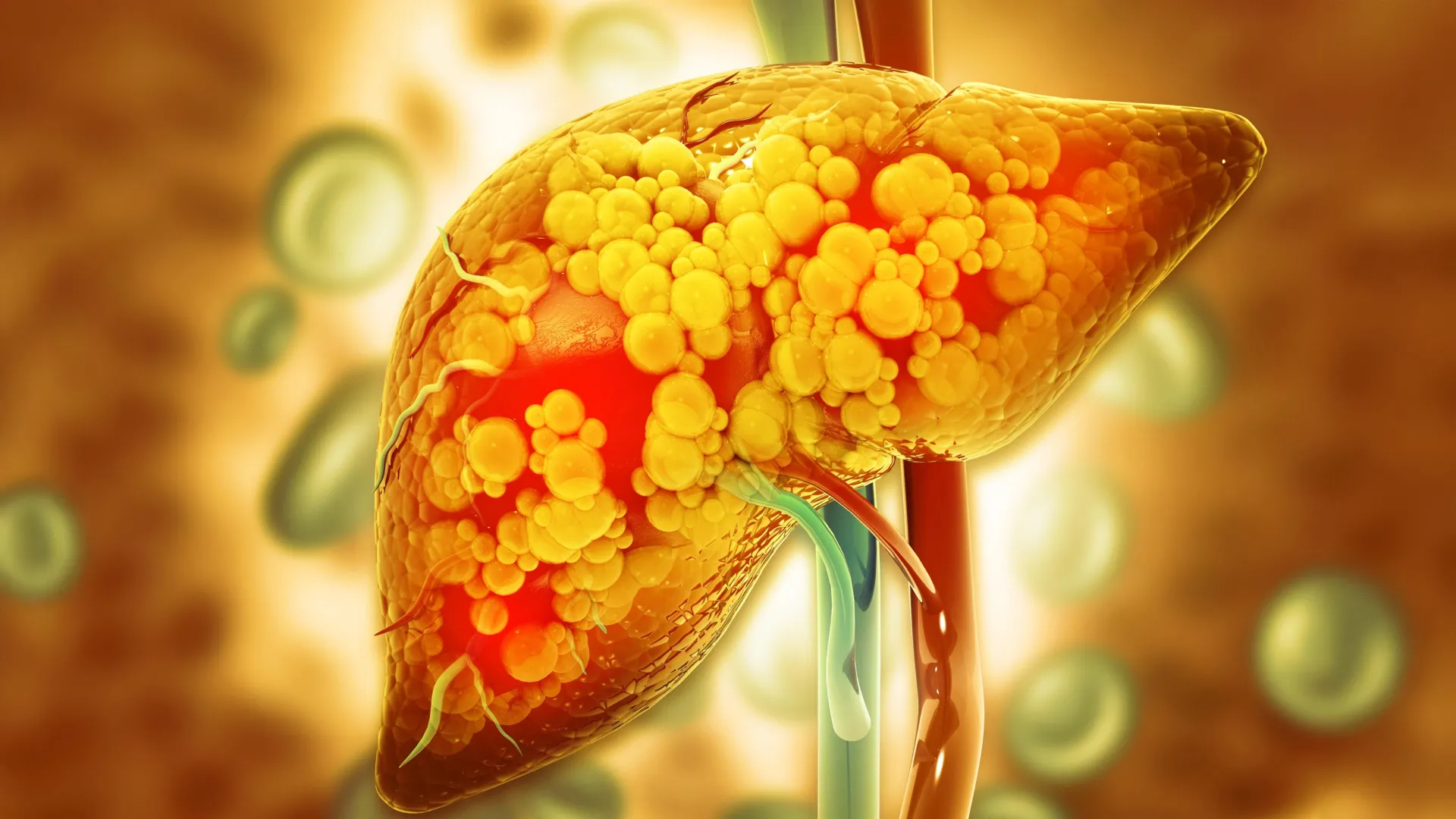
Children whose mothers eat a diet high in fat and sugar during pregnancy and breastfeeding face a greater chance of developing fatty liver disease later in life. New findings from the University of Oklahoma suggest that this risk may be lowered. In the study, pregnant and nursing mice given a naturally occurring compound made by healthy gut bacteria had offspring with much lower rates of fatty liver disease as they grew older.
The compound studied is called indole. It is produced by beneficial gut bacteria when they break down tryptophan, an amino acid found in foods like turkey and nuts. The results add to growing research focused on preventing metabolic dysfunction-associated steatotic liver disease (MASLD). This form of fatty liver disease affects both adults and children, but it often advances more quickly in children and is closely linked to diabetes.
"The prevalence of MASLD in children is about 30% in those with obesity and about 10% in children without obesity," said Jed Friedman, Ph.D., director of the OU Health Harold Hamm Diabetes Center and professor of biochemistry and physiology in the OU College of Medicine. "Unfortunately, the risk is higher if a mother is obese or consumes a poor diet. The disease in children is silent and typically isn't discovered until a parent seeks help for their child for liver-related symptoms."
Testing the Role of the Microbiome
Friedman led the study alongside Karen Jonscher, Ph.D., associate professor of biochemistry and physiology in the OU College of Medicine. Their work was published in the journal eBioMedicine. The team set out to explore whether gut bacteria, known together as the microbiome, influence how fatty liver disease develops.
To investigate this, female mice were fed a high-fat, high-sugar (Western-style) diet throughout pregnancy and lactation. Some of the mice also received indole. After they were weaned, the offspring were placed on a standard diet and later switched to a Western-style diet to encourage the development of fatty liver disease.
"Because offspring inherit their microbiome from their mother, a poor maternal diet can shape the infant's microbiome in harmful ways," Friedman said.
Healthier Livers and Lasting Benefits
Offspring born to mothers that received indole showed multiple health advantages. They had healthier livers, gained less weight, maintained lower blood sugar levels, and developed smaller fat cells, even after being exposed to an unhealthy diet later in life. The researchers also observed activation of a protective gut pathway involving the acyl hydrocarbon receptor (AHR).
The study found no increase in harmful liver fats known as long-chain ceramides, while levels of beneficial very long-chain ceramides rose. In a key experiment, gut bacteria from the protected offspring were transferred to other mice that had not received indole. Those mice also experienced less liver damage, reinforcing the idea that the microbiome itself plays a central protective role.
Implications for Preventing Childhood MASLD
Although the research was conducted in animals and cannot yet be applied directly to humans, the findings point to new strategies for reducing the growing impact of MASLD through early prevention.
At present, weight loss is the only effective treatment option for pediatric MASLD once the disease is established, and there are no approved medications. "Anything we can do to improve the mother's microbiome may help prevent the development of MASLD in the offspring," Jonscher said. "That would be far better than trying to reverse the disease once it has already progressed."
Story Source:
Materials provided by University of Oklahoma. Note: Content may be edited for style and length.
Journal Reference:
- Ashok Mandala, Ram Babu Undi, Rachel C. Janssen, Kameron Y. Sugino, Wanke Zhao, Benjamin N. Nelson, April M. Teague, Nikhil Y. Patil, Karin Zemsky Berry, Rohan Varshney, Bryan C. Bergman, Michael C. Rudolph, Aditya D. Joshi, Raju V.S. Rajala, Karen R. Jonscher, Jacob E. Friedman. Reprogramming offspring liver health: maternal indole supplementation as a preventive strategy against MASLD. eBioMedicine, 2026; 123: 106098 DOI: 10.1016/j.ebiom.2025.106098
Cite This Page: