
A simple blood test mismatch linked to kidney failure and death
- Date:
- January 21, 2026
- Source:
- NYU Langone Health / NYU Grossman School of Medicine
- Summary:
- A major global study suggests that a hidden mismatch between two common blood tests could quietly signal serious trouble ahead. When results from creatinine and cystatin C—two markers used to assess kidney health—don’t line up, the risk of kidney failure, heart disease, and even death appears to rise sharply. Researchers found that this gap is especially common among hospitalized and older patients, and that relying on just one test may miss early warning signs.
- Share:
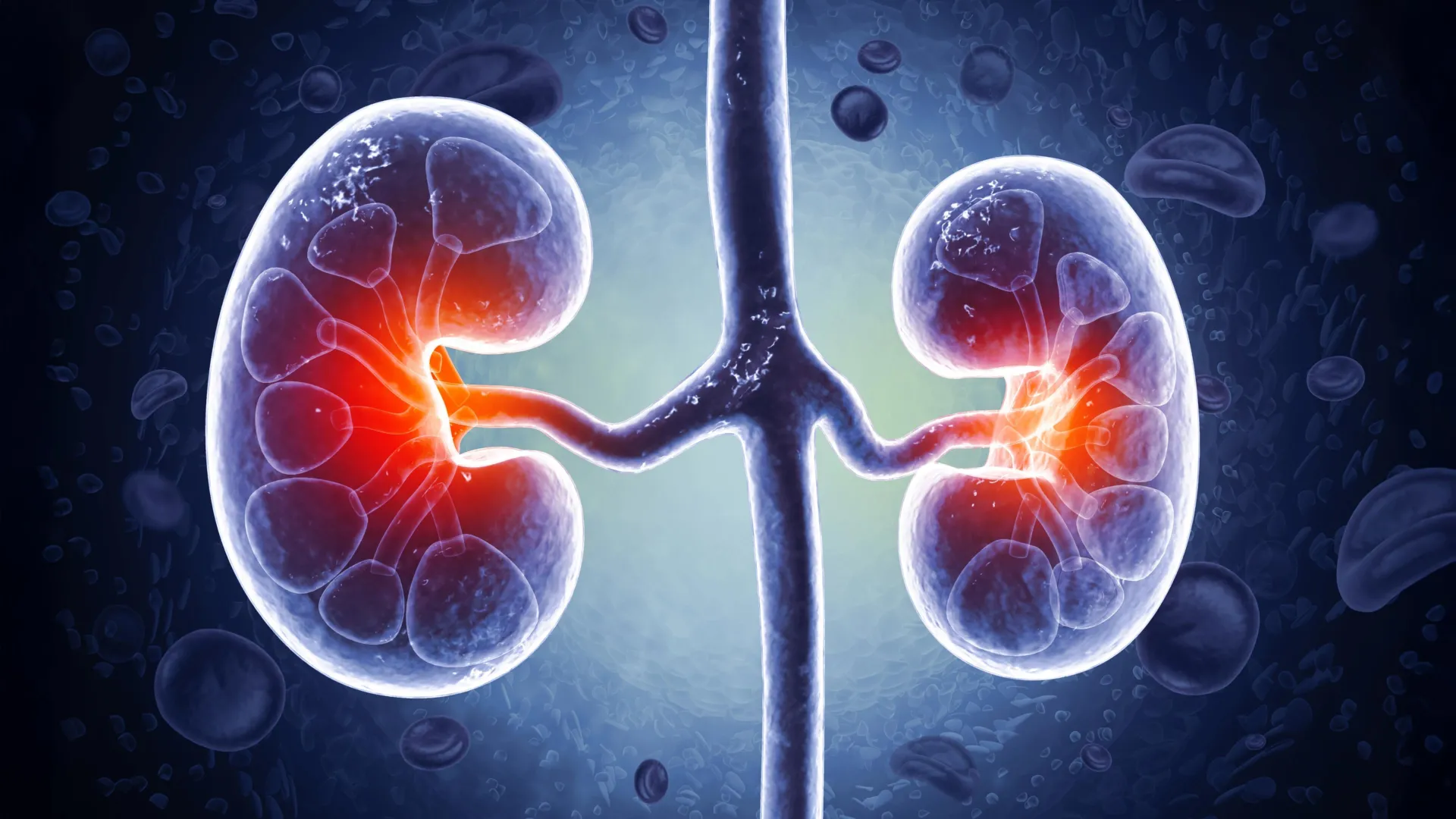
A difference between two widely used blood tests for kidney health may serve as an early warning sign for serious outcomes, including kidney failure, heart disease, and death, according to new research.
For many years, doctors have relied on a blood marker called creatinine to estimate how well the kidneys filter waste produced by muscle activity. More recent medical guidelines also recommend measuring cystatin C, a small protein produced by all cells in the body, as another way to assess kidney function. Because these two markers are affected by different biological processes, using both together can offer a clearer picture of kidney health and future risk than either test alone.
Two Tests, One Concerning Gap
Researchers from NYU Langone Health found that large differences between creatinine and cystatin C results are common, particularly among people who are already ill. In a large international analysis, more than one third of hospitalized patients had cystatin C results that suggested kidney function was at least 30% worse than what their creatinine levels indicated. This gap, the researchers say, may point to underlying disease that would otherwise go unnoticed.
"Our findings highlight the importance of measuring both creatinine and cystatin C to gain a true understanding of how well the kidneys are working, particularly among older and sicker adults," said study co-corresponding author Morgan Grams, MD, PhD. "Evaluating both biomarkers may identify far more people with poor kidney function, and earlier in the disease process, by covering the blind spots that go with either test."
The study was published in the Journal of the American Medical Association and was presented at the American Society of Nephrology's annual Kidney Week conference.
Why Kidney Testing Matters Beyond Diagnosis
Accurate kidney function measurements are critical not only for detecting disease, but also for determining safe medication doses. Kidney performance helps guide dosing for cancer treatments, antibiotics, and many commonly prescribed drugs, according to Grams, who is the Susan and Morris Mark Professor of Medicine at the NYU Grossman School of Medicine.
In a separate study released the same day, the same research group reported that chronic kidney disease now affects more people worldwide than ever before and has become the ninth leading cause of death globally. Grams notes that better tools for early detection could allow patients to begin treatment sooner and reduce the need for extreme measures such as dialysis or organ transplantation. She is also a professor in the Department of Population Health at NYU Grossman School of Medicine.
A Massive Global Analysis
For the current study, investigators reviewed medical records, blood test results, and demographic information from 860,966 adults representing six different nationalities. All participants had both creatinine and cystatin C measured on the same day and were followed for an average of 11 years. The analysis accounted for factors that can influence these markers but are not directly related to kidney function, including smoking, obesity, and a history of cancer.
Conducted through the international Chronic Kidney Disease Prognosis Consortium, the research is the largest investigation so far to examine how differences between these two tests relate to long-term health outcomes. The consortium was created to improve understanding of chronic kidney disease and to support consistent global definitions of the condition and its risks.
Higher Risks Linked to Larger Differences
The study found that people whose cystatin C results showed kidney filtration at least 30% lower than their creatinine results faced significantly higher risks of death, heart disease, and heart failure. They were also more likely to develop severe chronic kidney disease that required dialysis or an organ transplant. Similar patterns were observed in 11% of outpatients and individuals who appeared healthy at the time of testing.
Grams pointed out that cystatin C testing was first recommended in 2012 by the international organization Kidney Disease -- Improving Global Outcomes. Despite that guidance, a 2019 survey showed that fewer than 10% of clinical laboratories in the United States performed the test in-house. Since then, the two largest laboratory companies, Quest Diagnostics and Labcorp, have begun offering it.
"These results underscore the need for physicians to take advantage of the fact that more hospitals and health care providers are starting to offer cystatin C testing," said study co-corresponding author Josef Coresh, MD, PhD, director of NYU Langone's Optimal Aging Institute. "Physicians might otherwise miss out on valuable information about their patients' well-being and future medical concerns."
Coresh, who is also the Terry and Mel Karmazin Professor of Population Health at NYU Grossman School of Medicine, noted that among hospitalized Americans included in the study, fewer than 1% had been tested for cystatin C.
Study Support and Contributors
The research was funded by National Institutes of Health grant R01DK100446 and by the National Kidney Foundation.
Michelle Estrella, MD, MHS, of the University of California, San Francisco, served as the study's first author, while Kai-Uwe Eckardt, MD, of Charite-Universitatsmedizin Berlin in Germany, was the senior author. Along with Grams and Coresh, co-leaders of the Chronic Kidney Disease Prognosis Consortium, NYU Langone contributors included Shoshana Ballew, PhD; Yingying Sang, MS; and Aditya Surapaneni, PhD. Additional investigators came from institutions across the United States, Europe, Asia, and Australia, reflecting the global scope of the research effort.
Story Source:
Materials provided by NYU Langone Health / NYU Grossman School of Medicine. Note: Content may be edited for style and length.
Journal Reference:
- Michelle M. Estrella, Shoshana H. Ballew, Yingying Sang, Morgan E. Grams, Josef Coresh, Aditya Surapaneni, Natalia Alencar de Pinho, Johan Ärnlöv, Hermann Brenner, Juan-Jesus Carrero, Teresa K. Chen, Debbie L. Cohen, Mary Cushman, Ron T. Gansevoort, Shih-Jen Hwang, Lesley A. Inker, Joachim H. Ix, Keiko Kabasawa, Tsuneo Konta, Jennifer S. Lees, Kevan R. Polkinghorne, Michael G. Shlipak, Robin W. M. Vernooij, David C. Wheeler, Ashok Kumar Yadav, Andrew S. Levey, Kai-Uwe Eckardt, Teresa K Chen, Yingying Sang, Morgan E Grams, Josef Coresh, Steven Chadban, Kevan Polkinghorne, Nisha Bansal, Joachim H Ix, Michael G Shlipak, Marie Metzger, Benedicte Stengel, Martin Landray, John N Townend, Jonathan Emberson, Chi-yuan Hsu, Wei Yang, Amanda Anderson, Hermann Brenner, Dietrich Rothenbacher, Ben Schöttker, Hannah Stocker, Daniel Levy, Martin Larson, Anna Kottgen, Peggy Sekula, Ulla T Schultheiss, Markus P Schneider, Vivek Kumar, Manisha Sahay, Narayan Prasad, Robin WM Vernooij, Andrew S Levey, Lesley A Inker, Mark Sarnak, Orlando M Gutierrez, Mary Cushman, Stephan JL Bakker, Lyanne M Kieneker, Marco van Londen, Katharine Cheung, Titi Ilori, Edouard L Fu, Anne-Laure Faucon, Aurora Caldinelli, Antoine Creon, Tsuneo Konta, Kazunobu Ichikawa, Satoru Nagase, Masafumi Watanabe, Jennifer S Lees, Patrick B Mark, Anders Larsson, Vilmantas Giedraitis, Keiko Kabasawa, Yumi Ito, Junta Tanaka, Ichiei Narita, Michelle Estrella, Shoshana H Ballew, Juan-Jesus Carrero, Ron T Gansevoort, Kunihiro Matsushita, Dorothea Nitsch, Angela Yee-Moon Wang, Carina M Flaherty, Aditya Surapaneni. Discordance in Creatinine- and Cystatin C–Based eGFR and Clinical Outcomes. JAMA, 2025; 334 (21): 1915 DOI: 10.1001/jama.2025.17578
Cite This Page: