
Forty years of forest data reveal a changing Amazon
- Date:
- January 25, 2026
- Source:
- University of Liverpool
- Summary:
- After analyzing 40 years of tree records across the Andes and Amazon, researchers found that climate change is reshaping tropical forests in uneven ways. Some regions are steadily losing tree species, especially where conditions are hotter and drier, while others are seeing gains. Rainfall patterns turned out to be just as important as rising temperatures.
- Share:
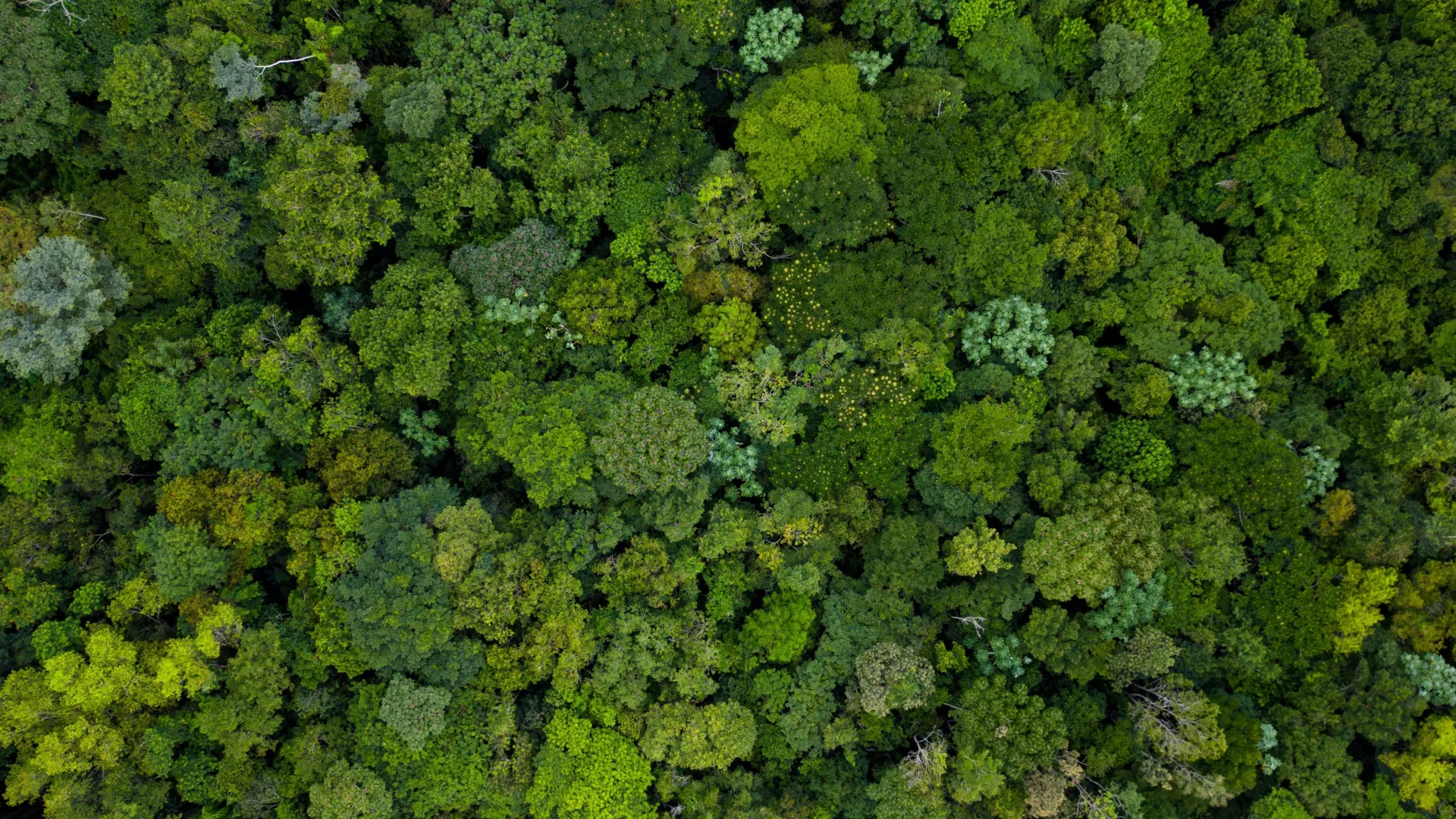
A new study published in Nature Ecology and Evolution shows that tropical forests across the Amazon and Andes have experienced major changes in tree diversity in recent decades as global environmental conditions continue to shift.
The research was led by Dr. Belen Fadrique of the University of Liverpool and is based on 40 years of detailed tree records. These data were collected by hundreds of botanists and ecologists working in long-term forest plots, providing one of the most comprehensive assessments yet of how tree diversity is changing in some of the most biologically rich forests on Earth.
Overall Stability Hides Regional Declines and Gains
When researchers looked at tree diversity across South America as a whole, they found that total species richness has remained mostly stable. However, this apparent balance conceals strong regional differences.
In several large areas, tree diversity has declined over time, while other regions have seen an increase in the number of species. These contrasting patterns reveal that climate change is affecting tropical forests in uneven ways rather than producing uniform outcomes.
Hotter and Drier Forests Lose Species
The analysis showed that forests exposed to higher temperatures, drier conditions, and stronger seasonal changes were more likely to lose tree species. In contrast, forests with healthier ecosystems and naturally dynamic conditions often gained species over the same period.
The strongest losses were observed in the Central Andes, the Guyana Shield, and Central Eastern Amazon forests, where most long-term monitoring plots recorded declines. Meanwhile, the Northern Andes and Western Amazon stood out as regions where tree species numbers increased in most plots.
While rising temperatures had a broad influence on tree diversity, the study found that rainfall levels and seasonal rainfall patterns played a critical role in shaping these regional trends.
Northern Andes Emerges as a Potential Climate Refuge
One of the most important findings is the identification of the Northern Andes as a possible "refuge" for tree species affected by climate change. As environmental conditions worsen in other areas, this region may provide shelter for species displaced from surrounding forests.
The research team analyzed data covering the South American tropics, a region that contains more than 20,000 tree species.
Their work spans ten countries and includes 406 long-term floristic plots that have been measured repeatedly since the 1970s and 1980s. These rare and consistent records allowed scientists to track changes in tree species richness over time and identify the key environmental factors driving those changes for the first time at this scale.
How Plant Species Respond to a Warming Climate
Plant species have limited ways to cope with climate change. They can shift their geographic ranges as conditions change, or they can adapt to new environments where they already grow. When species are unable to move or adjust, their populations may decline, increasing the risk of extinction.
Dr. Fadrique is a Dorothy Hodgkin Royal Society and University of Liverpool Research Fellow with the Department of Geography & Planning. She is the study's lead author and carried out the research while she was a Marie Curie Fellow at the University of Leeds.
She said, "Our work assessing species responses to climate change points to profound changes in forest composition, and species richness at multiple scales."
Flavia Costa, Professor at INPA (Instituto Nacional de Pesquisas da Amazônia) in Brazil, added, "This study underscores the uneven impacts of climate change on tree diversity across different tropical forests, highlighting the need for specific monitoring and conservation efforts in each region."
Professor Oliver Phillips of the University of Leeds, who leads the pan-Amazon RAINFOR network, emphasized the added threat of deforestation. He said, "Our findings stress the vital links between preserving forests, protecting biodiversity, and fighting climate change. It is especially critical to protect remaining forests where the Amazon meets the Andes. Only if they stay standing can they offer a long-term home to species in adjacent lowlands."
What the Team Plans to Study Next
The researchers plan to continue investigating how climate change is reshaping tropical tree diversity.
Dr. Fadrique said, "Future studies will focus on complex compositional questions, including the taxonomic and functional identities of species being lost or recruited, and whether this points to a large-scale process of homogenization within the Andes-Amazon region."
The study was the result of an international collaboration involving more than 160 researchers from 20 countries. Many contributions came from South American universities and research partners. The work was supported by major research networks, including RAINFOR, Red de Bosques Andinos, the Madidi Project, and the PPBio network.
Story Source:
Materials provided by University of Liverpool. Note: Content may be edited for style and length.
Journal Reference:
- B. Fadrique, F. Costa, F. Cuesta, G. Arellano, L. Cayuela, T. R. Baker, F. C. Draper, A. Esquivel-Muelbert, H. ter Steege, M. Bauters, J. Aguirre-Gutiérrez, Z. Aguirre-Mendoza, M. N. Alexiades, E. Alvarez-Davila, E. Arets, E. Ayala, C. G. A. Aymard, F. Baccaro, S. Báez, C. Baraloto, R. I. Barbosa, P. Barbosa Camargo, J. Barlow, P. E. Barni, J. Barroso, M. Benchimol, A. C. Bennett, E. Berenguer, L. Blanc, D. Bonal, F. Bongers, R. Brienen, F. Brown, M. BT Andrade, B. Burban, R. J. Burnham, J. L. Camargo, S. P. C. Carvalho, C. Castilho, J. Chave, F. Coelho de Souza, J. Comiskey, L. da Costa, R. B. de Lima, E. A. de Oliveira, R. L. C. de Oliveira, R. de Oliveira Perdiz, J. De Rutte, J. del Aguila-Pasquel, G. Derroire, A. Di Fiore, M. Disney, A. Duque, T. Emilio, W. Farfan-Rios, S. Fauset, P. M. Fearnside, K. J. Feeley, T. R. Feldpausch, J. Ferreira, L. Ferreira, G. R. Flores Llampazo, D. Galbraith, K. García-Cabrera, M. García Criado, E. Gloor, J. M. Grandez-Rios, B. Hérault, J. Homeier, E. N. Honorio Coronado, I. Huamantupa-Chuquimaco, W. Huaraca Huasco, Y. T. Huillca-Aedo, Á. Idárraga, O. Jadán-Maza, M. Kalamandeen, T. J. Killeen, S. G. W. Laurance, W. F. Laurance, A. Levesley, W. Lopez, M. J. Macía, W. E. Magnusson, Y. Malhi, A. G. Manzatto, B. S. Marimon, B. H. Marimon Junior, J. A. Martínez-Villa, M. B. Medeiros, K. Melgaço, L. Melo, T. Metzker, A. Monteagudo, P. S. Morandi, J. A. Myers, H. M. Nascimento, R. Nascimento, D. Neill, B. Nieto-Ariza, W. A. Palacios, S. Palacios-Ramos, N. C. Pallqui-Camacho, G. Pardo Molina, J. Peacock, M. A. Peña, R. T. Pennington, M. C. Peñuela, C. A. Peres, Á. J. Pérez, G. C. Pickavance, E. Pinto, J. Pipoly, N. Pitman, A. Prieto, H. Ramírez-Angulo, S. M. Reis, Z. Restrepo, C. Reynel, S. Ribeiro, G. Rivas-Torres, R. Rojas, A. Rudas, N. Salinas, R. P. Salomão, F. Santana, J. Schietti, G. Schwartz, J. Serrano, M. Silman, C. Silva, C. A. Silva, R. C. Silva, R. S. A. Silva, J. Silva-Espejo, M. Silveira, M. F. Simon, Y. C. Soto-Shareva, P. F. Souza, D. Storck-Tonon, J. Stropp, V. Swamy, J. S. Tello, J. Terborgh, R. Thomas, A. Torres-Lezama, J. D. Vale, L. Valenzuela Gamarra, G. van der Heijden, P. van der Hout, P. J. van der Meer, R. Vasquez Martinez, L. Vedovato, H. Verbeeck, I. Vieira, S. A. Vieira, E. Vilanova, B. Vinceti, V. A. Vos, R. Zagt, P. A. Zuidema, O. L. Phillips. Tree diversity is changing across tropical Andean and Amazonian forests in response to global change. Nature Ecology, 2026; DOI: 10.1038/s41559-025-02956-5
Cite This Page: