
This simple design could save oyster reefs worldwide
Scientists just cracked nature’s oyster reef blueprint—and it could help rebuild oceans.
- Date:
- April 6, 2026
- Source:
- Macquarie University
- Summary:
- Oyster reefs aren’t random piles—they’re carefully shaped survival systems. Researchers discovered that certain geometric patterns, not just bigger or more complex structures, give young oysters the best chance to thrive. By mimicking these natural designs, artificial reefs can dramatically boost oyster survival. The findings could help restore ecosystems that have been devastated worldwide.
- Share:
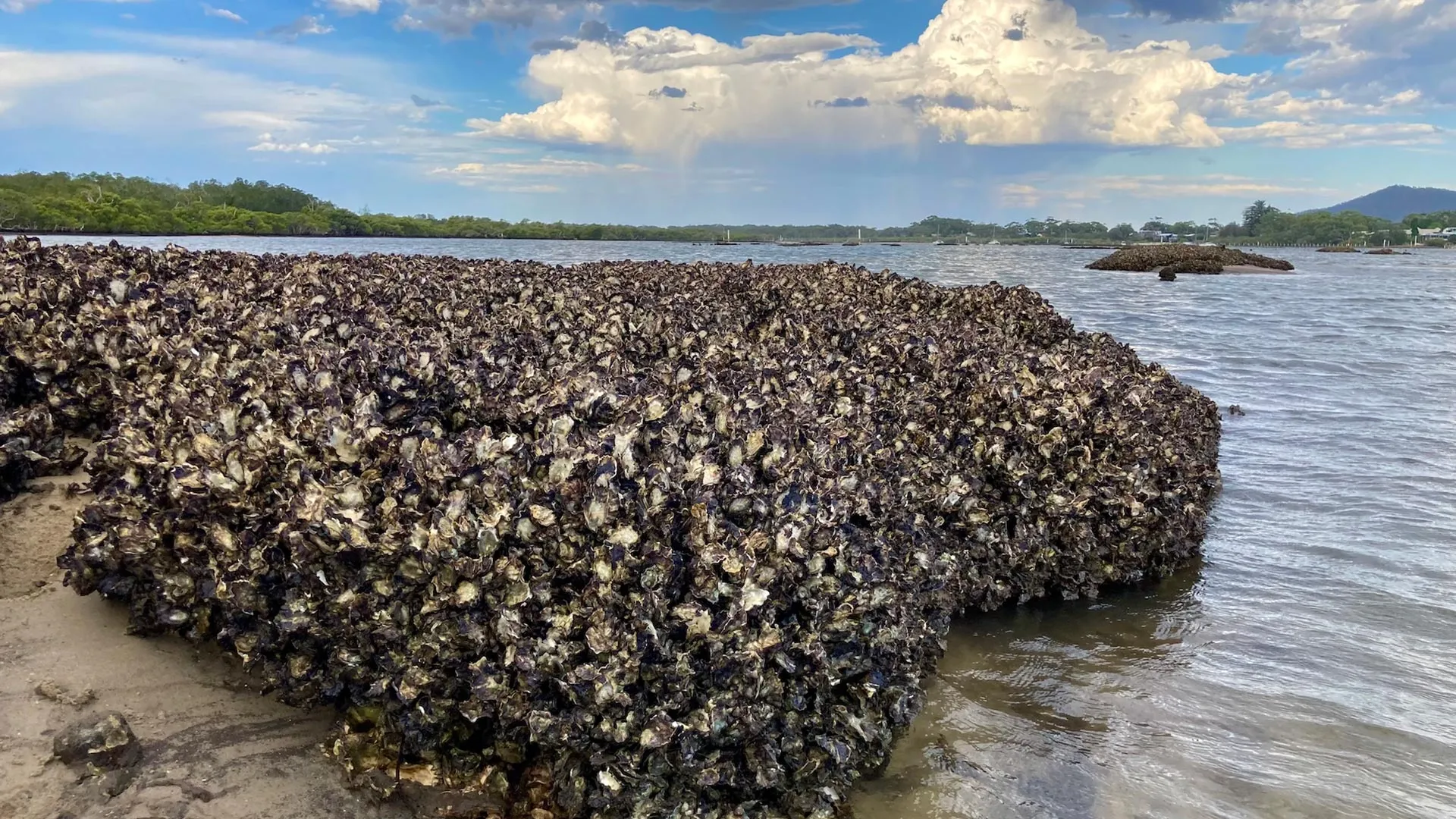
New research has revealed how to design artificial habitats that give oyster reefs the best chance to recover. The findings come from a detailed analysis of the natural shapes and structures of oyster reefs.
Published in the journal Nature, the study shows that oyster reefs are not random clusters of shells. Instead, their shapes and arrangements play a critical role in helping young oysters settle, survive, and avoid predators.
Oyster Reefs Are Complex Living Structures
Oysters act as "ecosystem engineers," building reefs made from both living oysters and the shells of earlier generations, explains lead author Dr. Juan Esquivel-Muelbert of Macquarie University.
"But reefs aren't just piles of shells or skeletons," says Dr. Esquivel-Muelbert. "Reefs are finely tuned 3D systems. Their shape controls who lives, who dies and how fast the reef grows."
To better understand this structure, the research team studied surviving Sydney rock oyster (Saccostrea glomerata) reefs using high-resolution 3D photogrammetry. This allowed them to capture and map the full complexity of natural reef geometry.
Testing Artificial Reef Designs in the Field
Using computer models, the scientists then created 16 types of concrete "tiles" with different ridge heights and patterns that reflected the range of shapes found in natural reefs.
They placed groups of these tiles in three estuaries in the Sydney region, Brisbane Water, the Hawkesbury River and Port Hacking, near existing oyster reefs where larvae are present. Some setups included predator-proof cages, while others did not.
Over time, the team tracked how many young oysters settled on the structures, how quickly they grew, and how many survived.
Small Protected Spaces Boost Oyster Survival
The results showed that the most effective designs were not the tallest or most complex ones. Instead, success depended on specific combinations of features that matched natural reef structures.
"Our experiment showed the optimal configuration for both establishment and long-term survival was one that provided multiple small spaces for baby oysters to grow in with minimal exposure to predators or harmful environmental stress," says Dr. Esquivel-Muelbert.
"While total surface area is important, juvenile oysters are very small and highly susceptible to predators like fish and crabs and to overheating and drying out. That's ultimately what you need to form a reef. There's no point in having lots of oyster larvae turning up if they don't survive."
A Blueprint for Global Reef Restoration
The researchers say these findings offer practical guidance for restoring oyster reefs, not only in Australia but around the world where shellfish and coral ecosystems have been heavily damaged.
"An estimated 85 per cent of the oyster reefs that were present along the coastline of Australia at the time of European settlement have been lost," says senior author Professor Melanie Bishop, a coastal ecologist at Macquarie University.
"Not only were oysters harvested for food from the earliest days of colonization, but the reefs themselves were dredged and the shells crushed and burned to make lime for cement and mortar," she says. "Many of Sydney's early colonial buildings are held together with oyster shell."
Why Oyster Reefs Matter for Ecosystems
Oyster reefs do more than support oyster populations. They create habitat for hundreds of plant and animal species and help protect coastlines from erosion.
"This work shows that there are universal architectural rules for reef persistence," says Professor Joshua Madin of the Hawaiʻi Institute of Marine Biology (HIMB), co-senior author of the study. "Nature has already solved the design problem. Our job is to read that blueprint and scale it up to help reefs grow faster and survive longer."
Story Source:
Materials provided by Macquarie University. Note: Content may be edited for style and length.
Journal Reference:
- Juan R. Esquivel-Muelbert, Luisa Fontoura, Kyle Zawada, Katherine Erickson, William Figueira, Joshua S. Madin, Melanie J. Bishop. The natural architecture of oyster reefs maximizes recruit survival. Nature, 2026; DOI: 10.1038/s41586-026-10103-8
Cite This Page: