
New discovery offers real hope for rare genetic disease
Lowering FDX2 gives cells a new way to compensate for the missing protein at the core of Friedreich’s ataxia.
- Date:
- December 12, 2025
- Source:
- Mass General Brigham
- Summary:
- Scientists discovered that certain gene changes allow cells to function even when frataxin, the protein lost in Friedreich’s ataxia, is missing. Experiments in worms, human cells, and mice revealed that lowering a gene called FDX2 helps restore vital energy processes. The work points to a new, more targeted treatment strategy.
- Share:
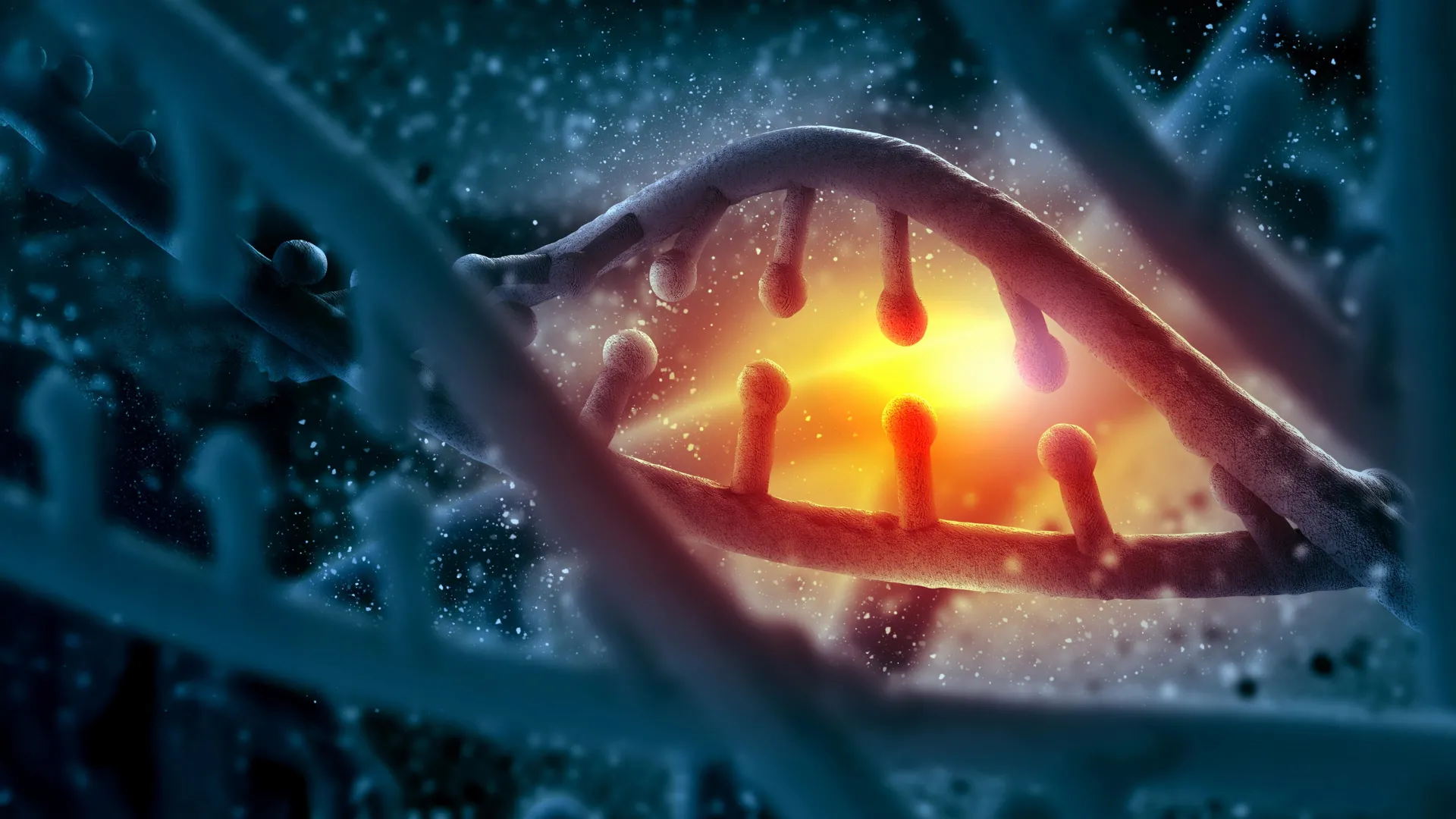
Friedreich's ataxia (FA) is an uncommon but very serious inherited condition. Symptoms usually appear in childhood or early adolescence, often between ages 5 and 15, and many affected individuals live only into their 30s or 40s. There is currently no broadly approved therapy that slows or alters the disease itself, and available treatments may not work for everyone. Scientists from Mass General Brigham and the Broad Institute are exploring new therapeutic approaches and have identified a genetic modifier that could point toward a future treatment strategy. Their results appear in Nature.
To investigate why FA develops and how it might be treated, researchers rely on small but powerful model organisms. The disease is caused by the loss of frataxin, a mitochondrial protein needed for the production of iron sulfur clusters, which help cells carry out essential energy-related tasks. Earlier work from the Mootha lab showed that exposing human cells, worms, and mice to low oxygen (hypoxia) can partly offset the effects of missing frataxin.
"In this paper, instead of trying to pursue hypoxia to slow or postpone the disease as a therapy, we simply used it as a trick. We used it as a laboratory tool with which to discover genetic suppressors," said lead and co-corresponding author Joshua Meisel, a former postdoctoral fellow at Massachusetts General Hospital (MGH), part of Mass General Brigham. Meisel, now an assistant professor at Brandeis University, added, "The reason this is exciting is because the suppressor that we've identified, FDX2, is now a protein that can be targeted using more conventional medicines."
Using Worm Models to Reveal Hidden Genetic Interactions
The team, which included Nobel laureate Gary Ruvkun, PhD, studied a tiny roundworm species called C. elegans to understand how cells might function without frataxin. They engineered worms that completely lacked the protein and kept them alive by growing them in low-oxygen environments. This allowed the researchers to test genetic changes one by one and search for rare worms that could survive even when oxygen levels were increased (a normally deadly condition for worms without frataxin).
By sequencing the genomes of the worms that survived these higher oxygen levels, the researchers uncovered mutations in two mitochondrial genes: FDX2 and NFS1. They then verified these findings through advanced genetic engineering, biochemical experiments, and follow-up studies in mouse and human cells to assess whether the same compensation might occur in more complex organisms.
A New Understanding of How Cells Compensate for Frataxin Loss
The results showed that certain mutations in FDX2 and NFS1 allow cells to work around the absence of frataxin by restoring their ability to make iron sulfur clusters. These clusters are crucial for producing cellular energy and supporting many metabolic functions. The team also discovered that excessive levels of FDX2 interfere with this process, while reducing FDX2, either through mutation or by removing one copy of the gene, helps restore cluster production and improves cell health.
"The balance between frataxin and FDX2 is key," said senior and co-corresponding author Vamsi Mootha, MD, of the Department of Molecular Biology and Center for Genome Medicine at MGH. Mootha, also an institute member and co-director of the Metabolism Program at Broad, explained, "When you are born with too little frataxin, bringing down FDX2 a bit helps. So, it's a delicate balancing act to ensure proper biochemical homeostasis."
Therapeutic Potential and Remaining Questions
Lowering FDX2 levels in a mouse model of FA led to meaningful improvements in neurological symptoms, suggesting that this approach could form the basis for a future therapy. Overall, the findings indicate that carefully adjusting proteins that interact genetically with frataxin may help counteract the damage caused by frataxin loss.
Although these discoveries are encouraging, the researchers caution that the ideal balance between frataxin and FDX2 likely varies among tissues and conditions. Additional research will be needed to understand how this balance is controlled in people. Future pre-clinical studies will also be required to determine whether modifying FDX2 levels is both safe and effective before any potential human trials could be considered.
Study Team, Patents, and Funding
In addition to Meisel, Mootha, and Ruvkun, authors include Pallavi R. Joshi, Amy N. Spelbring, Hong Wang, Sandra M. Wellner, Presli P. Wiesenthal, Maria Miranda, Jason G. McCoy, and David P. Barondeau.
Mootha is listed as an inventor on patents filed by MGH involving therapeutic uses of hypoxia. Meisel, Ruvkun, and Mootha are inventors on a patent filed by MGH related to the technology described in this work; Meisel, Ruvkun, and Mootha own equity in and receive compensation from Falcon Bio, a company developing this technology. Mootha also serves as a paid advisor to 5am Ventures.
This research was supported by the Friedreich's Ataxia Research Alliance, the National Institutes of Health (R00GM140217, R01NS124679, R01AG016636, and R01GM096100), and the Robert A. Welch Foundation (A-1647). Meisel received support from The Jane Coffin Childs Memorial Fund for Medical Research. Miranda received support from the Deutsche Forschungsgemeinschaft (431313887). Mootha is an Investigator of the Howard Hughes Medical Institute.
Story Source:
Materials provided by Mass General Brigham. Note: Content may be edited for style and length.
Journal Reference:
- Joshua D. Meisel, Pallavi R. Joshi, Amy N. Spelbring, Hong Wang, Sandra M. Wellner, Presli P. Wiesenthal, Maria Miranda, Jason G. McCoy, David P. Barondeau, Gary Ruvkun, Vamsi K. Mootha. Mutations in mitochondrial ferredoxin FDX2 suppress frataxin deficiency. Nature, 2025; DOI: 10.1038/s41586-025-09821-2
Cite This Page: