
Brain scans reveal how ketamine quickly lifts severe depression
Scientists have finally visualized how ketamine rewires key brain receptors to rapidly relieve treatment-resistant depression.
- Date:
- March 8, 2026
- Source:
- YCU Advanced Medical Research Center
- Summary:
- A new brain-imaging study has revealed how ketamine produces its fast antidepressant effects in people with treatment-resistant depression. Researchers tracked changes in a critical brain receptor that helps neurons communicate and found that ketamine reshapes its activity in specific brain regions tied to mood and reward. These shifts strongly matched improvements in patients’ symptoms. The findings could help scientists develop better ways to predict who will benefit from ketamine therapy.
- Share:
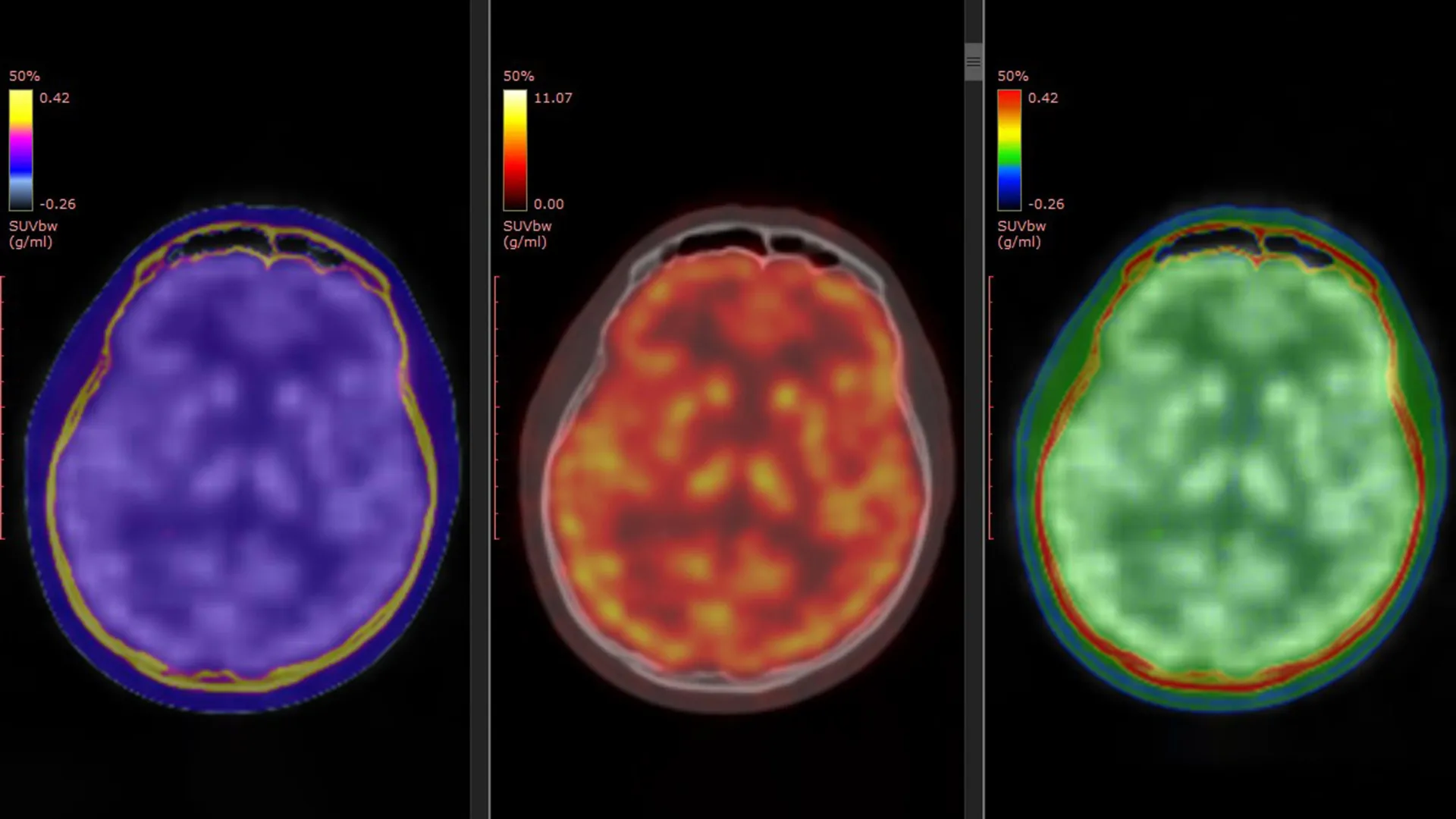
Major depressive disorder (MDD) is a major global health problem and one of the leading causes of disability. About 30% of people diagnosed with depression develop treatment-resistant depression (TRD), meaning their symptoms do not improve sufficiently with standard antidepressant medications. Ketamine has gained attention as a fast-acting antidepressant for people with TRD. However, scientists have not fully understood how it works inside the human brain, which has made it difficult to refine and personalize this treatment.
A new study published in Molecular Psychiatry on March 5, 2026, sought to clarify this mystery. The research was led by Professor Takuya Takahashi of the Department of Physiology at Yokohama City University Graduate School of Medicine in Japan. The team used an advanced positron emission tomography (PET) imaging method to directly observe changes in glutamate α-amino-3-hydroxy-5-methyl-4-isoxazole propionic acid receptor (AMPAR). This receptor is a key protein that helps regulate communication between brain cells and plays an important role in synaptic plasticity and glutamatergic signaling in patients receiving ketamine.
Prof. Takahashi explained, "Although ketamine has shown rapid antidepressant effects in patients with treatment-resistant depression, its molecular mechanism in the human brain has remained unclear."
Visualizing Brain Receptors With a Novel PET Tracer
The research relied on a PET tracer developed earlier by the team, known as [¹¹C]K-2. This tracer allows scientists to visualize cell-surface AMPAR directly in the living human brain. Previous laboratory and animal studies suggested that ketamine's antidepressant effects involve AMPAR activity. The new research provides the first direct evidence of this process occurring in humans.
To conduct the study, the researchers combined data from three registered clinical trials carried out in Japan. The study group included 34 patients diagnosed with TRD and 49 healthy participants who served as controls.
Patients received intravenous ketamine or a placebo over a two-week period. PET brain imaging was performed before the start of treatment and again after the final infusion. This approach allowed researchers to compare changes in AMPAR levels and distribution in the brain over time.
Region-Specific Brain Changes Linked to Symptom Relief
The results showed that people with TRD had widespread abnormalities in AMPAR density compared with healthy participants. These differences appeared in specific brain regions rather than across the brain as a whole.
Ketamine did not produce uniform changes throughout the brain. Instead, improvements in depressive symptoms were linked to dynamic, region-specific adjustments in AMPAR levels. Some cortical areas showed increased receptor density, while reductions were seen in regions associated with reward processing, especially the habenula. These region-specific shifts were strongly connected to improvements in patients' depressive symptoms.
"Ketamine's antidepressant effect in patients with TRD is mediated by dynamic changes in AMPAR in the living human brain," Prof. Takahashi explained. "Using a novel PET tracer, [11C]K-2, we were able to visualize how ketamine alters AMPAR distribution across specific brain regions and how these changes correlate with improvements in depressive symptoms."
These observations provide direct human evidence that supports mechanisms previously identified in animal studies and connects them to real clinical antidepressant effects.
Potential Biomarker for Predicting Treatment Response
The findings do more than clarify how ketamine works. They may also have practical clinical value. PET imaging of AMPAR could potentially serve as a biomarker that helps doctors evaluate and predict how individuals with TRD will respond to ketamine treatment.
Because many patients do not respond to standard antidepressants, identifying reliable biological markers for treatment response remains an important goal in mental health care.
Toward More Personalized Depression Treatments
By allowing scientists to directly observe AMPAR activity in the living human brain, this research helps bridge a long-standing gap between laboratory research and clinical psychiatry. The results identify AMPAR modulation as a central mechanism behind ketamine's rapid antidepressant effects and suggest that AMPAR PET imaging could guide more personalized treatment strategies in the future.
Ultimately, this work could support the development of more precise therapies for people living with treatment-resistant depression.
This work was supported by the Ministry of Education, Culture, Sports, Science and Technology (Special Coordination Funds for Promoting Science and Technology); the Japan Agency for Medical Research and Development (AMED) (grant numbers: JP18dm0207023, JP19dm0207072, JP24wm0625304, JP25gm7010019, and JP20dm0107124); the Japan Society for the Promotion of Science KAKENHI (grant numbers: 22H03001, 20H00549, 20H05922, 23K10432, 19H03587, 20K20603, 22K15793, and 21K07508); the Takeda Science Foundation; the Keio Next-Generation Research Project Program; the SENSHIN Medical Research Foundation; and the Japan Research Foundation for Clinical Pharmacology.
Story Source:
Materials provided by YCU Advanced Medical Research Center. Note: Content may be edited for style and length.
Journal Reference:
- Waki Nakajima, Mai Hatano, Yohei Ohtani, Hideaki Tani, Taisuke Yatomi, Shohei Tsuchimoto, Yu Fujimoto, Tsuyoshi Eiro, Sadamitsu Ichijo, Kotaro Nakano, Tetsu Arisawa, Yuuki Takada, Kimito Kimura, Hiroki Abe, Akane Sano, Kie Nomoto-Takahashi, Kengo Yonezawa, Sota Tomiyama, Nobuhiro Nagai, Keisuke Kusudo, Shiori Honda, Sotaro Moriyama, Shinichiro Nakajima, Takashige Yamada, Yu Iwabuchi, Masahiro Jinzaki, Kimio Yoshimura, Shariful A. Syed, Sakiko Tsugawa, Hiroyuki Uchida, Takuya Takahashi. The dynamics of AMPA receptors underlies the efficacy of ketamine in treatment resistant patients with depression. Molecular Psychiatry, 2026; DOI: 10.1038/s41380-026-03510-w
Cite This Page: