
Eating more meat may lower Alzheimer’s risk for some people
- Date:
- April 2, 2026
- Source:
- Karolinska Institutet
- Summary:
- A surprising new study suggests that genetics may change how diet affects brain health—especially when it comes to Alzheimer’s risk. Researchers found that older adults carrying high-risk APOE gene variants didn’t show the expected cognitive decline if they ate relatively high amounts of meat. In fact, those with these genes who consumed the most meat had slower cognitive decline and lower dementia risk, challenging conventional dietary advice.
- Share:
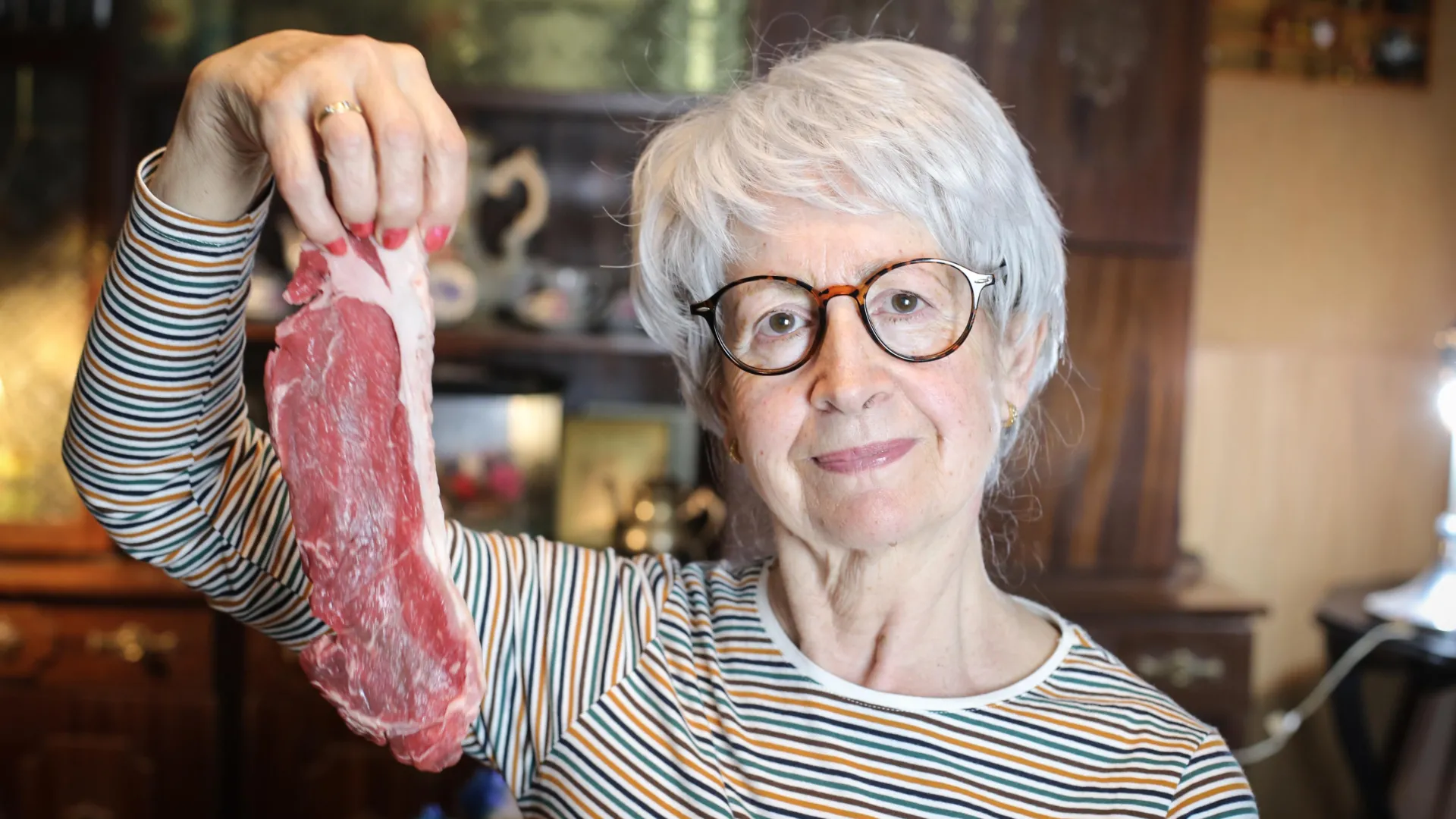
Older adults who carry genes linked to a higher risk of Alzheimer's disease may not experience the expected increase in cognitive decline if they eat relatively large amounts of meat. That is the key finding from a new study by researchers at Karolinska Institutet, published in JAMA Network Open. The results suggest that dietary advice could eventually be tailored more precisely based on a person's genetic profile.
The APOE gene plays a major role in determining Alzheimer's risk. In Sweden, about 30 percent of people carry the APOE 3/4 or APOE 4/4 gene combinations. Among individuals diagnosed with Alzheimer's disease, nearly 70 percent have one of these variants.
Last year, the Swedish Food Agency reviewed existing research on diet and dementia and called for more studies to better understand how meat consumption might influence dementia risk.
Why Researchers Studied Meat Intake
"This study tested the hypothesis that people with APOE 3/4 and 4/4 would have a reduced risk of cognitive decline and dementia with higher meat intake, based on the fact that APOE4 is the evolutionarily oldest variant of the APOE gene and may have arisen during a period when our evolutionary ancestors ate a more animal-based diet," says first author Jakob Norgren, researcher at the Department of Neurobiology, Care Sciences and Society, Karolinska Institutet.
Long-Term Study of Diet and Brain Health
The research followed more than 2,100 adults participating in the Swedish National Study on Aging and Care, Kungsholmen (SNAC-K). All participants were at least 60 years old and free of dementia at the beginning of the study. They were tracked for up to 15 years.
Researchers analyzed self-reported dietary habits alongside measures of cognitive health, while accounting for factors such as age, sex, education, and lifestyle.
Meat Intake and Dementia Risk
Among participants who consumed lower amounts of meat, those with APOE 3/4 and 4/4 had more than twice the risk of developing dementia compared to individuals without these gene variants.
However, this elevated risk was not observed in the group that consumed the most meat. In this highest-intake group, median consumption was about 870 grams of meat per week, adjusted to a daily energy intake of 2,000 calories.
"Those who ate more meat overall had significantly slower cognitive decline and a lower risk of dementia, but only if they had the APOE 3/4 or 4/4 gene variants," says Jakob Norgren. He continues:
"There is a lack of dietary research into brain health, and our findings suggest that conventional dietary advice may be unfavourable to a genetically defined subgroup of the population. For those who are aware that they belong to this genetic risk group, the findings offer hope; the risk may be modifiable through lifestyle changes."
Processed vs Unprocessed Meat Matters
The type of meat also appeared to make a difference.
"A lower proportion of processed meat in total meat consumption was associated with a lower risk of dementia regardless of APOE genotype," says Sara Garcia-Ptacek, assistant professor at the same department, who together with senior lecturer Erika J Laukka is the study's last author.
Potential Benefits Beyond Brain Health
The researchers also found broader health effects. In a follow-up analysis, people with APOE 3/4 and 4/4 who consumed more unprocessed meat had a significantly lower risk of death from any cause.
Study Limitations and Need for Clinical Trials
Because the study is observational, it cannot prove cause and effect. More rigorous intervention studies are needed to confirm whether dietary changes directly influence dementia risk.
"Clinical trials are now needed to develop dietary recommendations tailored to APOE genotype," says Jakob Norgren. He continues:
"Since the prevalence of APOE4 is about twice as high in the Nordic countries as in the Mediterranean countries, we are particularly well suited to conduct research on tailored dietary recommendations for this risk group."
Facts About the APOE Gene
Apolipoprotein E plays a key role in transporting cholesterol and fats in both the brain and bloodstream. The APOE gene has three main forms: epsilon 2, 3, and 4. These variants influence the likelihood of developing Alzheimer's disease and cardiovascular disease.
Each person inherits two copies of the gene, one from each parent, resulting in six possible combinations (genotypes): 2/2, 2/3, 2/4, 3/3, 3/4, and 4/4.
Compared to the most common genotype 3/3, having one copy of the 4 variant increases Alzheimer's risk by about three to four times, while having two copies raises the risk by about ten to fifteen times. The 2 variant is linked to a lower risk. However, these risk levels can vary across different ethnic groups.
Source: Belloy et al., JAMA Neurology, 2023
Funding and Disclosure
The research was supported by several organizations, including the Swedish Alzheimer's Foundation, the Swedish Dementia Foundation, the Emil and Wera Cornell Foundation, the Leif Lundblad family and other philanthropists, the Swedish Research Council, and FORTE. The researchers report no related conflicts of interest.
Story Source:
Materials provided by Karolinska Institutet. Note: Content may be edited for style and length.
Journal Reference:
- Jakob Norgren, Adrián Carballo-Casla, Giulia Grande, Anne Börjesson-Hanson, Hong Xu, Maria Eriksdotter, Erika J. Laukka, Sara Garcia-Ptacek. Meat Consumption and Cognitive Health by APOE Genotype. JAMA Network Open, 2026; 9 (3): e266489 DOI: 10.1001/jamanetworkopen.2026.6489
Cite This Page: