
95% of people carry this virus and scientists may have just found how to stop it
- Date:
- April 15, 2026
- Source:
- Fred Hutchinson Cancer Center
- Summary:
- Scientists have taken a major step toward stopping Epstein-Barr virus (EBV), an extremely common infection linked to cancer and chronic disease. By using mice engineered with human antibody genes, researchers created powerful human-like antibodies that block the virus from attaching to and entering immune cells. One of these antibodies completely prevented infection in lab models with human immune systems, marking a breakthrough after years of difficulty tackling EBV’s ability to invade nearly all B cells.
- Share:
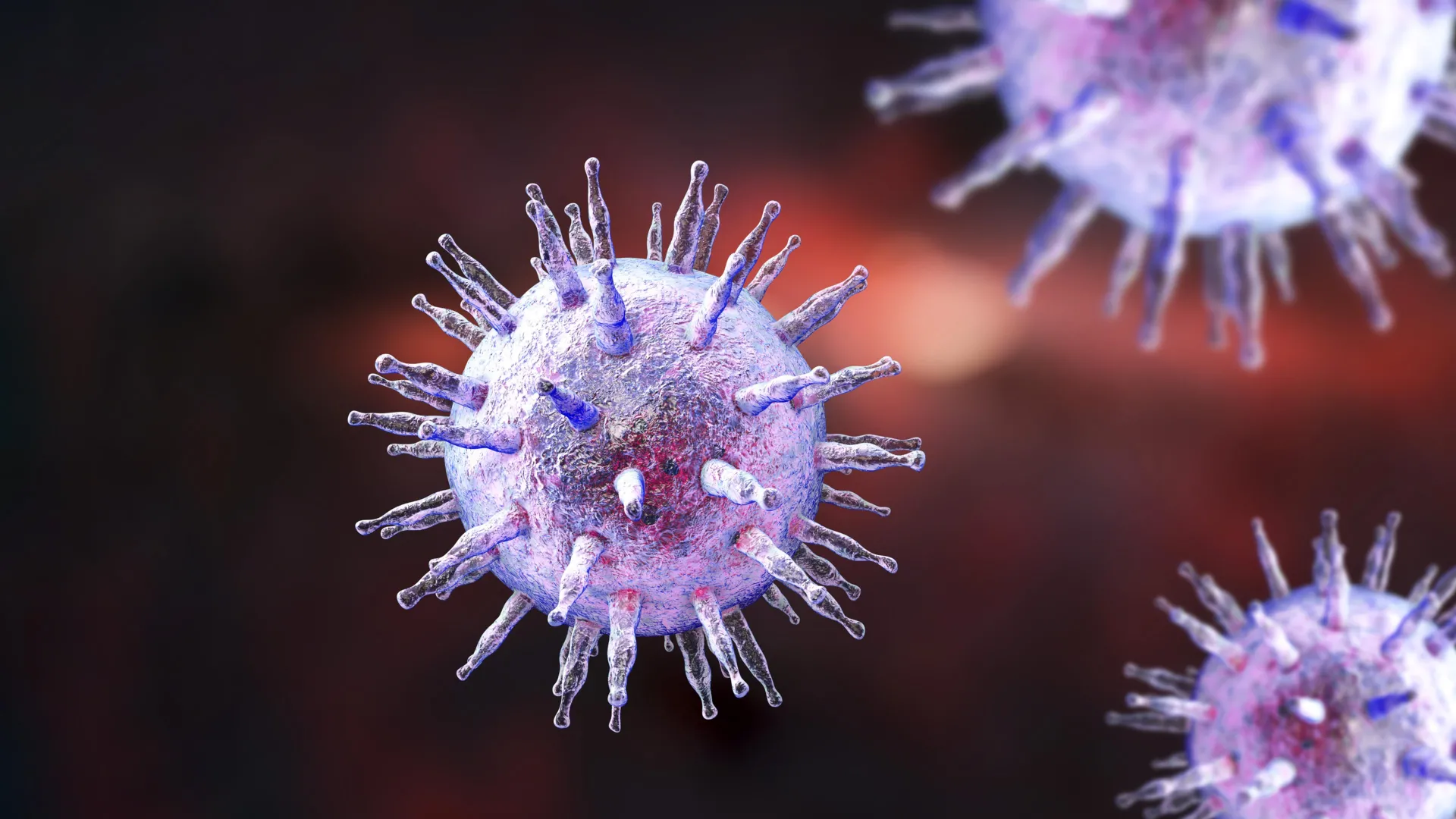
Fred Hutch Cancer Center researchers have made a significant advance in the effort to block Epstein Barr virus (EBV), a widespread infection that affects about 95% of people worldwide and is linked to several cancers, neurodegenerative conditions, and other long-term illnesses.
By working with mice engineered to produce human antibodies, the team created new monoclonal antibodies designed to stop the virus from attaching to and entering human immune cells. The findings, published in Cell Reports Medicine, show that one of these antibodies was able to completely prevent infection in mice with human-like immune systems when exposed to EBV.
"Finding human antibodies that block Epstein Barr virus from infecting our immune cells has been particularly challenging because, unlike other viruses, EBV finds a way to bind to nearly every one of our B cells," explained Andrew McGuire, PhD, a biochemist and cellular biologist in the Vaccine and Infectious Disease Division at Fred Hutch. "We decided to use new technologies to try to fill this knowledge gap and we ended up taking a critical step toward blocking one of the world's most common viruses."
New Antibody Strategy Targets EBV Entry Points
A major hurdle in developing these treatments has been identifying antibodies that can stop EBV without triggering an immune reaction against the therapy itself, which often happens when antibodies come from non-human sources. To address this, the researchers focused on two viral proteins, gp350 and gp42. The gp350 protein helps the virus attach to human cells, while gp42 allows it to fuse with and enter those cells.
Using their specialized mouse model, the scientists identified two monoclonal antibodies that target gp350 and eight that target gp42.
"Not only did we identify important antibodies against Epstein Barr virus, but we also validated an innovative a new approach for discovering protective antibodies against other pathogens," noted Crystal Chhan, a pathobiology PhD student in the McGuire Lab. "As an early-career scientist, it was an exciting finding and has helped me appreciate how science often leads to unexpected discoveries."
Further analysis, supported by Fred Hutch's Antibody Tech Core, revealed specific weak points on the virus that could guide future vaccine design. In final testing, one gp42-targeting antibody fully blocked EBV infection, while a gp350-targeting antibody offered partial protection.
Potential Impact for Transplant Patients at High Risk
Each year, more than 128,000 people in the United States receive solid organ or bone marrow transplants. These patients often require immunosuppressive drugs, which can allow EBV to reactivate or spread unchecked. Currently, there are no targeted therapies to prevent this.
Post-transplant lymphoproliferative disorders (PTLD) are a serious and sometimes life-threatening form of lymphoma that can develop after transplantation, most often driven by uncontrolled EBV infection.
"Post-transplant lymphoproliferative disorders (PTLD), most of which are EBV-associated lymphomas, are a frequent cause of morbidity and mortality after organ transplantation," noted Rachel Bender Ignacio, MD, MPH, an associate professor and infectious disease physician at Fred Hutch and University of Washington School of Medicine. "Preventing EBV viremia has strong potential to reduce the incidence of PTLD and limit the need to reduce immunosuppression, thereby helping preserve graft function while improving overall patient outcomes. Effective prevention of EBV viremia remains a significant unmet need in transplant medicine."
Patients may be exposed to EBV through donor organs that carry a latent form of the virus. In others who have previously been infected, immunosuppression can allow the virus to reactivate and multiply. Children undergoing transplants may be especially vulnerable, since many have not yet been exposed to EBV.
Toward a Preventive Antibody Therapy
The research team envisions a future where these monoclonal antibodies could be given as an infusion to prevent EBV infection or reactivation, especially in high-risk groups. By blocking the virus early, such a therapy could help prevent PTLD and other complications.
Fred Hutch has filed intellectual property claims related to the antibodies discovered in the study. McGuire and Chhan are now working with collaborators and an industry partner to move the research closer to clinical use. The next steps could include safety testing in healthy adults, followed by clinical trials in patients who are most at risk.
"There's momentum to advance our discovery to a therapy that would make a huge difference for patients undergoing transplant," said McGuire. "After many years of searching for a viable way to protect against Epstein Barr virus, this is a significant stride for the scientific community and the people at the highest risk of complications from this virus."
Story Source:
Materials provided by Fred Hutchinson Cancer Center. Note: Content may be edited for style and length.
Journal Reference:
- Crystal B. Chhan, Kevin Lang, Amelia R. Davis, Yu-Hsin Wan, Nicholas T. Aldridge, Gargi Kher, Samuel C. Scharffenberger, Samantha R. Hardy, Roman Iureniev, Natalia V. Giltiay, Kristina R. Edwards, Stefan Radtke, Hans-Peter Kiem, Marie Pancera, Andrew T. McGuire. Transgenic mouse-derived human monoclonal antibodies targeting EBV gp350 and gp42 provide basis for therapeutic development. Cell Reports Medicine, 2026; 7 (2): 102618 DOI: 10.1016/j.xcrm.2026.102618
Cite This Page: