
This simple fatty acid could restore failing vision
- Date:
- April 22, 2026
- Source:
- University of California - Irvine
- Summary:
- Scientists at UC Irvine have found a way to potentially reverse age-related vision loss by targeting the ELOVL2 “aging gene” and restoring vital fatty acids in the retina. Their experiments in mice show that supplementing with specific polyunsaturated fatty acids—not just DHA—can restore visual function and even reverse cellular aging signs.
- Share:
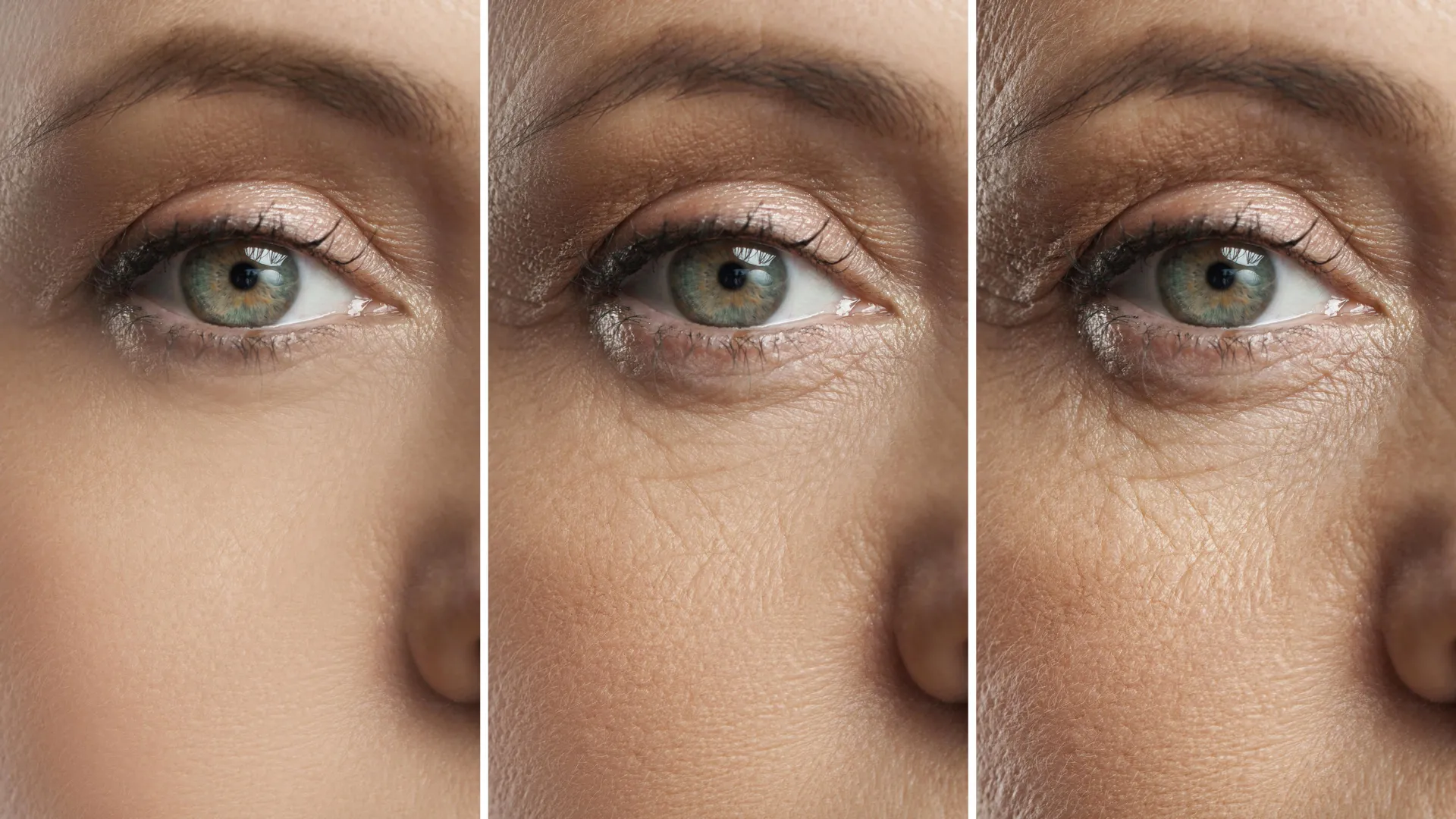
Changes in eyesight are one of the most common signs of aging. Sit in a dimly lit restaurant with someone over 60, and you will likely hear them say, "Hold on -- let me pull out my cell phone. I need more light to read the menu!" But what if that gradual decline in vision could be reversed?
Researchers at the University of California, Irvine are now exploring that possibility. Their latest study investigates a potential treatment aimed at slowing or even reversing "aging" in the eye, while also helping prevent conditions such as age-related macular degeneration (AMD).
"We show the potential for reversing age-related vision loss," says Dorota Skowronska-Krawczyk, PhD, an associate professor in the Department of Physiology and Biophysics and the Department of Ophthalmology and Visual Sciences. The research involved collaborators from UC Irvine, the Polish Academy of Sciences, and the Health and Medical University in Potsdam, Germany. The findings were published in Science Translational Medicine in a paper titled "Retinal polyunsaturated fatty acid supplementation reverses aging-related vision decline in mice."
The ELOVL2 Gene and Aging Vision
This study builds on earlier research focused on Elongation of Very Long Chain Fatty Acids Protein 2 (ELOVL2), a gene widely recognized as a marker of aging. "We showed that we have lower vision when this ELOVL2 enzyme isn't active," says Skowronska-Krawczyk, who is also affiliated with the Robert M. Brunson Center for Translational Vision Research at the UC Irvine School of Medicine.
In that earlier work, increasing ELOVL2 activity in older mice raised levels of the omega−3 fatty acid docosahexaenoic acid (DHA) in the eye and improved visual function.
The newer study aimed to find a way to achieve similar results without relying on the ELOVL2 enzyme itself.
Why Vision Declines With Age
As the body ages, changes in lipid metabolism reduce the levels of very-long-chain polyunsaturated fatty acids (VLC-PUFAs) in the retina. These molecules are essential for maintaining healthy vision. When their levels drop, vision can worsen, and the risk of AMD increases.
The ELOVL2 gene plays a central role in producing both VLC-PUFAs and DHA, making it a key factor in how the eye ages.
Fatty Acid Therapy Restores Vision in Mice
To bypass the limitations of ELOVL2, researchers tested whether supplying the eye with the right fatty acids could help. They injected older mice with a specific polyunsaturated fatty acid and observed improved visual performance.
"It's a proof-of-concept for turning lipid injection into a possible therapy," says Skowronska-Krawczyk. "What is important is that we didn't see the same effect with DHA." Other studies have also raised questions about whether DHA alone can slow the progression of AMD.
"Our work really confirms the fact that DHA alone cannot do the work, but we have this other fatty acid that is seemingly working and improving vision in aged animals," she says. "We have also shown on a molecular level that it actually reverses the aging features."
Genetic Links to Macular Degeneration Risk
The researchers also identified genetic variants in the ELOVL2 enzyme that are associated with faster progression of AMD. "Now we actually have a genetic connection to the disease and its aging aspect," says Skowronska-Krawczyk, "so we could potentially identify people at higher risk for vision loss progression."
This discovery could lead to more targeted treatments and earlier interventions aimed at preventing serious vision decline.
A Promising Target for Anti-Aging Therapies
These findings strengthen the case for ELOVL2 as a major factor in aging. "I am pretty convinced it's one of the top aging genes that we should look at when we think about anti-aging therapies," says Skowronska-Krawczyk.
Beyond the Eye: Links to Immune Aging
The research may have broader implications beyond vision. In collaboration with scientists at UC San Diego, Skowronska-Krawczyk has also begun studying how lipid metabolism affects aging in the immune system.
That work found that a lack of ELOVL2 can speed up the aging of immune cells. It also suggests that lipid supplementation throughout the body could help counteract age-related changes in the immune system and may even play a role in blood cancers.
"Our first study explored a potential therapy to address vision loss," says Skowronska-Krawczyk, "but with the information we've since learned about immune aging, we are hopeful the supplementation therapy will boost the immune system as well."
Story Source:
Materials provided by University of California - Irvine. Note: Content may be edited for style and length.
Journal Reference:
- Fangyuan Gao, Emily Tom, Cezary Rydz, William Cho, Alexander V. Kolesnikov, Yutong Sha, Anastasios Papadam, Samantha Jafari, Andrew Joseph, Ava Ahanchi, Nika Balalaei Someh Saraei, David C. Lyon, Andrzej Foik, Qing Nie, Felix Grassmann, Vladimir J. Kefalov, Dorota Skowronska-Krawczyk. Retinal polyunsaturated fatty acid supplementation reverses aging-related vision decline in mice. Science Translational Medicine, 2025; 17 (817) DOI: 10.1126/scitranslmed.ads5769
Cite This Page: