
For decades, scientists may have misunderstood how brain cells work
- Date:
- November 26, 2026
- Source:
- The Zuckerman Institute at Columbia University
- Summary:
- A major new study challenges a long-standing assumption about how the brain works, revealing that most neurons are versatile multitaskers rather than highly specialized workers. By analyzing recordings from 43 regions of the mouse brain, researchers discovered that although some neurons are dedicated to specific functions, most respond to a wide variety of information in remarkably distinct ways.
- Share:
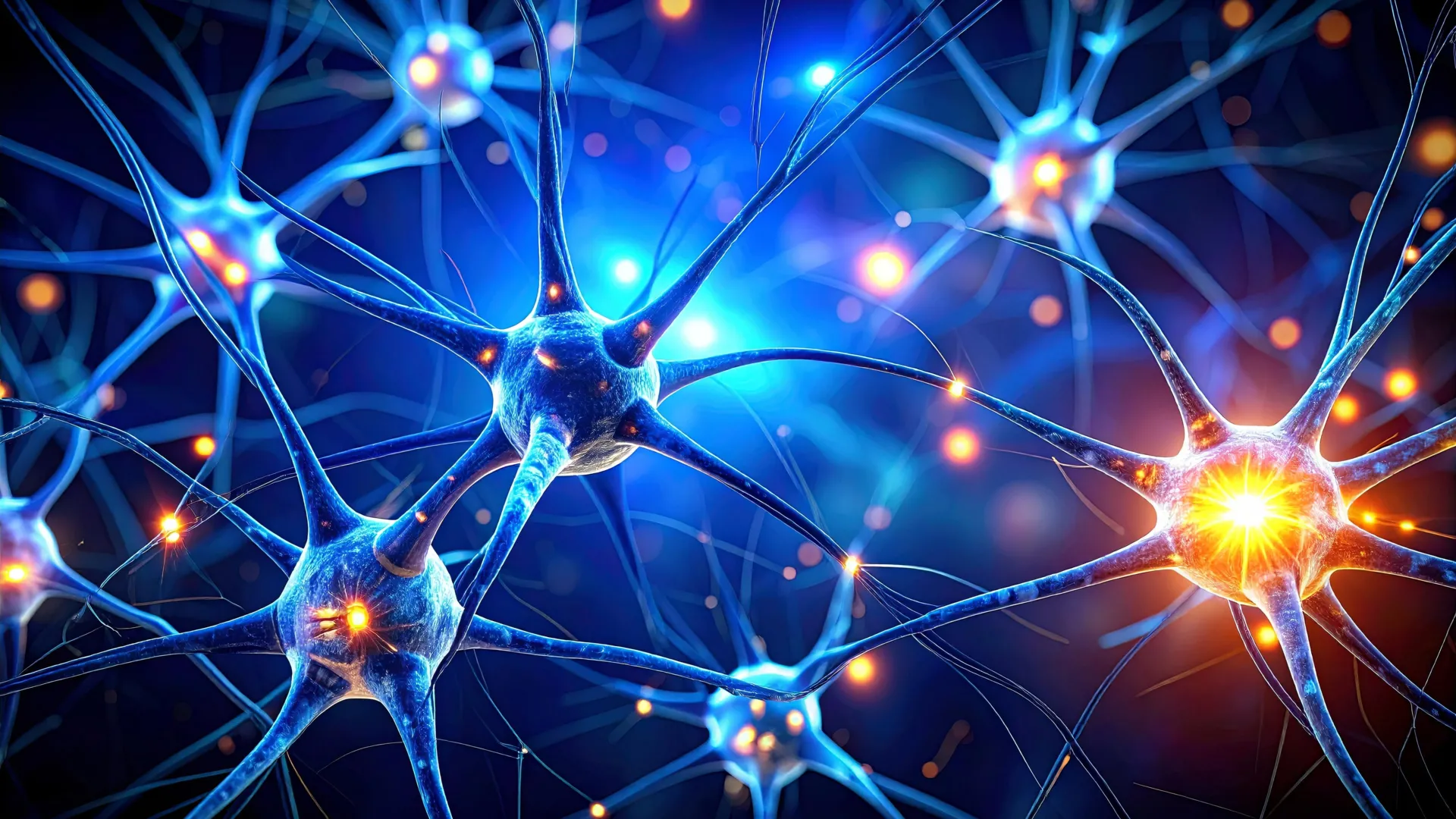
Even before a new neuroscience study appeared in Nature, its preliminary version had been downloaded more than 11,000 times. The research addresses one of the oldest and most hotly debated questions in neuroscience: how specialized are the individual cells that make up the brain?
Do neurons operate like individual tools, such as hammers and saws, each designed for a particular job? Or are they more like Swiss Army knives, capable of handling many different tasks?
Researchers at Columbia's Zuckerman Institute examined an extensive collection of mouse brain recordings gathered through an international collaboration. Their analysis revealed that while some neurons are indeed specialists, most appear capable of responding to many different kinds of information.
"We have to move away from this image of the brain as a machine made of gears, with every gear having an exact purpose that we can attach a label to," said Stefano Fusi, PhD, a principal investigator at Columbia's Zuckerman Institute, a member of the Kavli Institute for Brain Science and the paper's co-senior author. "The brain doesn't work like that. Instead, most neurons can display a huge diversity of responses, and this can help the brain solve a huge number of different tasks."
The discovery could help explain how the brain achieves its remarkable ability to perform complex tasks. It could also provide a foundation for understanding what happens when brain function is disrupted and identifying ways to restore it.
Revisiting a Decades-Old Neuroscience Debate
The question of whether neurons are specialists or generalists "is an old, important question, and one which researchers have really strong opinions on," said Lorenzo Posani, PhD, the study's co-lead author and a principal investigator at the Paris Brain Institute and France's CNRS. Posani conducted the research while working at Columbia's Zuckerman Institute.
Scientists have long known that the brain contains distinct regions responsible for functions such as sight and smell. This organization suggests that individual neurons might also have narrowly defined roles. However, the brain is also an extraordinarily powerful biological computer capable of adapting to countless situations, raising the possibility that its individual neurons are similarly versatile.
One reason the debate has persisted is that researchers have approached the question under widely different experimental conditions, Posani explained. Previous studies examined different animal species, investigated different parts of the brain, or required animals to complete different activities. Unsurprisingly, their conclusions often conflicted. Some experiments identified highly specialized neurons, while others revealed cells with much broader capabilities.
A Massive Study of 43 Brain Regions
To obtain a more consistent picture of neural activity, the researchers focused exclusively on mice performing the same type of task. They also examined numerous brain regions simultaneously, drawing on datasets considerably larger than those typically used in neuroscience research.
The recordings, collected by the International Brain Laboratory consortium, captured the activity of individual neurons across 43 regions of the mouse cerebral cortex.
The analysis revealed an important distinction. Neurons in primary sensory regions, including areas responsible for processing visual information, tended to exhibit more specialized responses. Across other regions, however, individual neurons displayed a considerably wider range of activity. The overall findings suggest that generalists, rather than specialists, dominate much of the cortex.
"We're not saying that there are no specialized neurons," said Dr. Fusi, who is also a professor of neuroscience at Columbia's Vagelos College of Physicians and Surgeons and a member of Columbia's Center for Theoretical Neuroscience. "We're saying they are the exceptions. They're not the rule."
Most Neurons Are Versatile in Different Ways
Despite the versatility of individual neurons, the brain retains a distinct regional organization. By examining how a neuron responded during a particular task, the scientists could identify with surprising accuracy which functional module it belonged to. Yet membership in a particular brain module did not generally mean that a neuron was limited to a single function.
"For example, compare this to maps of voter opinions," Dr. Posani said. "There are clear clusters where people generally vote the same way. But when you zoom in, you see mixes of opinions."
The researchers also uncovered another striking feature of neural activity. Not only do most neurons handle multiple kinds of information, but their patterns of activity rarely mirror those of other neurons.
"Each is versatile in its own way," says study co-lead author Shuqi Wang, a doctoral student at École Polytechnique Fédérale de Lausanne in Switzerland. According to Wang, this diversity helps give the brain its flexibility and impressive computational abilities.
The Secret Behind the Brain's Computing Power
The researchers propose that the versatility of neurons allows individual brain cells to represent several types of information at once. For example, a neuron might respond to both the color of an object, such as red or black, and its shape, such as a circle or square.
Working together, groups of neurons can form what scientists call "high-dimensional" representations of information. These representations capture multiple characteristics simultaneously, allowing the brain to distinguish a red circle from a black square, for instance.
This arrangement gives groups of neurons considerable flexibility in how they process incoming information and generate responses. Rather than requiring an entirely separate neural representation for every new task, the brain can draw on existing combinations of neural activity.
"You can reuse these high-dimensional representations for lots of different tasks," Dr. Fusi said.
Rethinking How Scientists Study the Brain
The findings also have significant implications for how neuroscientists investigate brain function. Because a single neuron can carry information about several different variables, determining precisely what it represents by examining its activity alone can be extremely difficult.
A clearer picture emerges when scientists analyze the combined activity of many neurons, much as the brain itself processes information through populations of cells.
This represents an important change in perspective for the neuroscience community, "which for decades focused on one neuron at a time, discarding all neurons whose responses could not be understood," Dr. Fusi said.
Do Human Brain Cells Work the Same Way?
The researchers are now collaborating with Ueli Rutishauser's research group at Caltech to determine whether human neurons exhibit similar patterns of versatility.
They also hope to establish whether the degree of specialization among neurons changes depending on the particular demands of a task.
"There is still a lot to discover," Dr. Fusi said.
The paper, "Rarely categorical and highly separable: how neural representations change along the cortical hierarchy," was published in Nature.
The full list of authors includes Lorenzo Posani, Shuqi Wang, Samuel P. Muscinelli, Liam Paninski and Stefano Fusi.
The research received funding from the National Institutes of Health (RF1AG080818, U19NS123716), the Simons Foundation, the Kavli Foundation, the Gatsby Foundation (GAT3708), and the Swartz Foundation. Additional support was provided by the National Science Foundation and the DoD Office of the Under Secretary of Defense (R&E) under Cooperative Agreement PHY-2229929 (the NSF AI Institute for Artificial and Natural Intelligence). Dr. Posani received additional support through the NIH 1K99MH135166-01 grant.
Story Source:
Materials provided by The Zuckerman Institute at Columbia University. Note: Content may be edited for style and length.
Journal Reference:
- Lorenzo Posani, Shuqi Wang, Samuel P. Muscinelli, Liam Paninski, Stefano Fusi. Rarely categorical, highly separable representations along the cortical hierarchy. Nature, 2026; DOI: 10.1038/s41586-026-10668-4
Cite This Page: