Electrons that act like photons reveal a quantum secret
Intriguing behavior of such electrons in particular materials produced by chemical synthesis.
Date:
September 13, 2025
Source:
Ehime University
Summary:
Quantum materials, defined by their photon-like electrons, are opening new frontiers in material science. Researchers have synthesized organic compounds that display a universal magnetic behavior tied to a distinctive feature in their band structures called linear band dispersion. This discovery not only deepens the theoretical understanding of quantum systems but also points toward revolutionary applications in next-generation information and communication technologies that conventional materials cannot achieve.
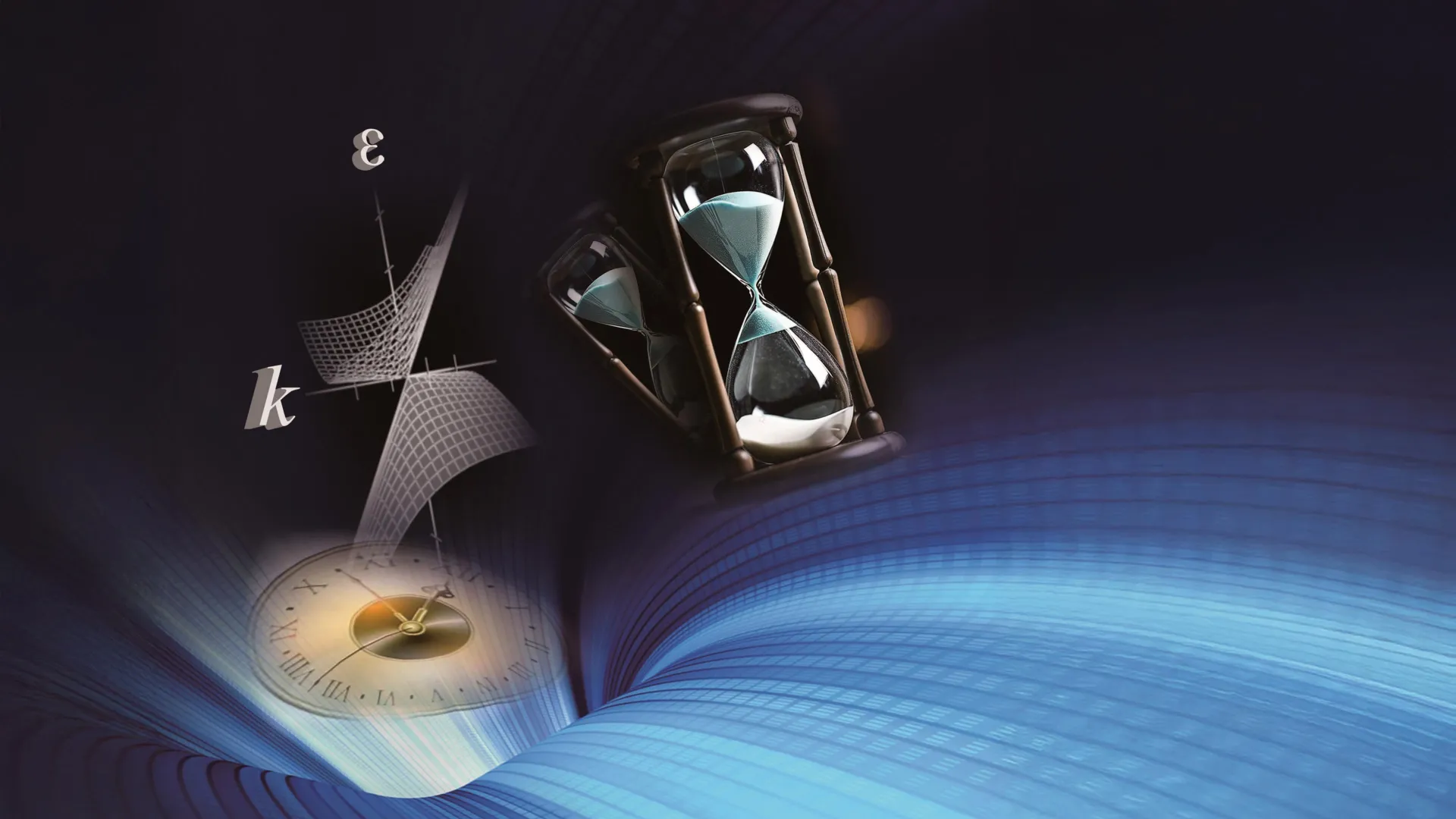
Quantum materials contain relativistic particles called Dirac electrons governing unique physical properties. They are sometimes massless and move with the light velocity, being rather like photons than electrons. However, in some organic charge-transfer complexes, they transform themselves between standard and Dirac electrons depending on temperature. Furthermore, they sometimes behave in between. Credit: DOI 10.1021/acs.jpclett.5c02197, Copyright American Chemical Society
Unique physical properties of materials have been the center of interest in material science community. Among them, quantum materials have recently garnered growing attention, because of their unprecedented physical properties governed by photon-like electrons. We have synthesized a series of organic compounds of as a new member of quantum materials.
After theoretical and experimental examination, we have discovered universal features of magnetic behavior shared by them. Based on our original theoretical model, the behavior is directly related to a characteristic feature of their band structures called linear band dispersion (LBD). Accordingly, such magnetic behavior is intrinsic and universal to quantum materials with LBD.
The findings here will accelerate the understanding and application of quantum materials, which will enable advanced information and communication technology that other materials cannot achieve.
Materials provided by Ehime University. Note: Content may be edited for style and length.
Journal Reference:
Sakura Hiramoto, Koki Funatsu, Kensuke Konishi, Haruhiko Dekura, Naoya Tajima, Toshio Naito. Universal Features of Magnetic Behavior Originating from Linear Band Dispersion: α-BETS2X and α′-BETS2Y (BETS = Bis(ethylenedithio)tetraselenafulvalene, X = IBr2, I2Br, Y = IBr2, ICl2). The Journal of Physical Chemistry Letters, 2025; 16 (35): 9116 DOI: 10.1021/acs.jpclett.5c02197
Ehime University. "Electrons that act like photons reveal a quantum secret." ScienceDaily. ScienceDaily, 13 September 2025. <www.sciencedaily.com/releases/2025/09/250912195124.htm>.
Ehime University. (2025, September 13). Electrons that act like photons reveal a quantum secret. ScienceDaily. Retrieved January 28, 2026 from www.sciencedaily.com/releases/2025/09/250912195124.htm
Ehime University. "Electrons that act like photons reveal a quantum secret." ScienceDaily. www.sciencedaily.com/releases/2025/09/250912195124.htm (accessed January 28, 2026).
Feb. 27, 2025 A team has shown that artificial photosynthesis is feasible using organic materials. Using the technique, they successfully synthesized useful organic compounds, including pharmaceutical materials, ...
Apr. 17, 2024 In some materials, spins form complex magnetic structures within the nanometer and micrometer scale in which the magnetization direction twists and curls along specific directions. Examples of such ...
May 5, 2023 Photovoltaics, the conversion of light to electricity, is a key technology for sustainable energy. Since the days of Max Planck and Albert Einstein, we know that light as well as electricity are ...
Oct. 7, 2022 Despite being considered well established, the physics of optical waves have some fundamental aspects, which are still under debate. One of these effects, the anomalous behavior of focused light ...
Mar. 24, 2022 Researchers have experimentally caused electrons to bend in bilayer graphene with the use of light. The way electrons flow in materials determine its electronic properties. For example, when a ...
Feb. 2, 2022 When a magnetic material like nickel is zapped with an incredibly short laser pulse, it loses its magnetism almost instantly within femtoseconds, or a millionth of a billionth of a second. But ...