
A new way to prevent gum disease without wiping out good bacteria
- Date:
- December 16, 2025
- Source:
- University of Minnesota, Twin Cities
- Summary:
- Scientists are uncovering a surprising way to influence bacteria—not by killing them, but by changing how they communicate. Researchers studying oral bacteria found that disrupting chemical signals used in bacterial “conversations” can shift dental plaque toward healthier, less harmful communities. The discovery could open the door to new treatments that prevent disease by maintaining a balanced microbiome rather than wiping bacteria out entirely.
- Share:
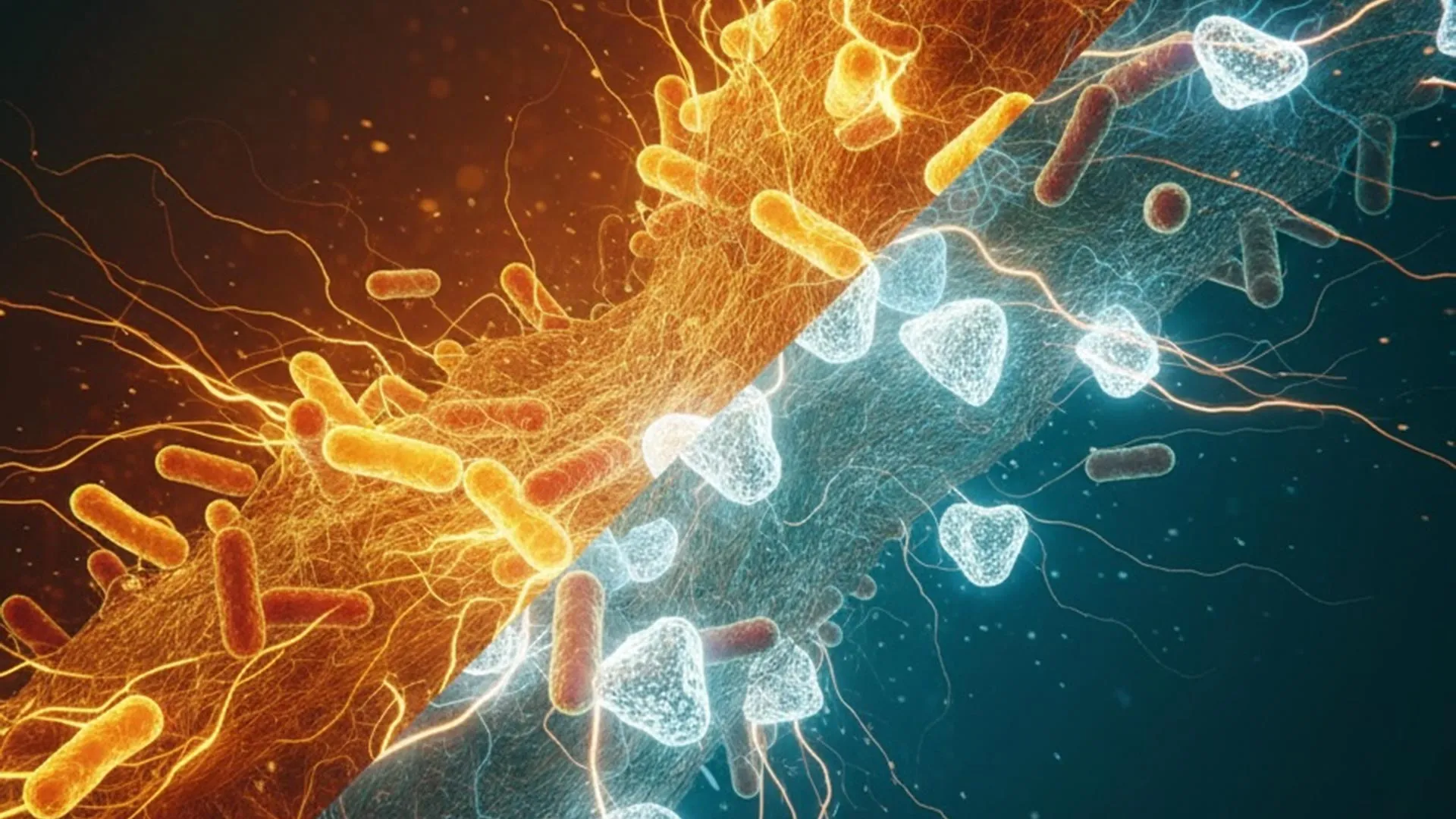
All living organisms adapt in order to survive, and bacteria are no exception. Over many decades, some bacteria have gradually become resistant to widely used antibiotics and disinfectants, creating serious challenges for medicine and public health. At the same time, countless bacterial species play a helpful and often critical role in keeping the human body healthy. This raises an important question. Instead of trying to eliminate bacteria, could scientists find ways to influence how they behave to reduce disease and improve health?
Bacteria are far from silent. Inside the human mouth, roughly 700 different bacterial species constantly exchange information through a process called quorum sensing. This chemical communication allows bacteria to coordinate their actions as a group. Many oral bacteria rely on signaling molecules known as N-acyl homoserine lactones (AHLs) to send and receive these messages.
Investigating Bacterial Communication in Dental Plaque
Researchers at the University of Minnesota, Twin Cities College of Biological Sciences and the School of Dentistry set out to explore how bacteria in the mouth communicate and whether that communication could be deliberately disrupted. Their goal was to determine if interfering with these signals could help prevent plaque buildup and support a healthier oral microbiome. The findings, published in the journal npj Biofilms and Microbiomes, suggest this approach could reshape how doctors think about treating bacterial diseases.
Key Findings From the Study
The researchers discovered several important patterns in how oral bacteria communicate and organize themselves:
- Bacteria in dental plaque generate AHL signals in oxygen-rich areas (such as above the gumline), and those signals can be detected by bacteria living in oxygen-poor regions (beneath the gumline).
- Eliminating AHL signals using specialized enzymes called lactonases led to an increase in bacterial species associated with good oral health.
- These results indicate that carefully chosen enzymes might be used to reshape dental plaque communities and help maintain a healthy balance of microbes.
Dental Plaque as a Living Ecosystem
"Dental plaque develops in a sequence, much like a forest ecosystem," said Mikael Elias, associate professor in the College of Biological Sciences and senior author of the study. "Pioneer species like Streptococcus and Actinomyces are the initial settlers in simple communities -- they're generally harmless and associated with good oral health. Increasingly diverse late colonizers include the 'red complex' bacteria like Porphyromonas gingivalis, which are strongly linked to periodontal disease. By disrupting the chemical signals bacteria use to communicate, one could manipulate the plaque community to remain or return to its health-associated stage."
"What's particularly striking is how oxygen availability changes everything," said lead author Rakesh Sikdar. "When we blocked AHL signaling in aerobic conditions, we saw more health-associated bacteria. But when we added AHLs under anaerobic conditions, we promoted the growth of disease-associated late colonizers. Quorum sensing may play very different roles above and below the gumline, which has major implications for how we approach treatment of periodontal diseases."
Toward New Microbiome-Based Treatments
The researchers plan to next examine how bacterial signaling differs across various regions of the mouth and among patients at different stages of periodontal disease. "Understanding how bacterial communities communicate and organize themselves may ultimately give us new tools to prevent periodontal disease -- not by waging war on all oral bacteria, but by strategically maintaining a healthy microbial balance," said Elias. The team believes this strategy could eventually lead to therapies for other parts of the body, where imbalances in the microbiome are linked to illness and certain forms of cancer.
Funding for the research was provided by the National Institutes of Health.
Story Source:
Materials provided by University of Minnesota, Twin Cities. Note: Content may be edited for style and length.
Journal Reference:
- Rakesh Sikdar, Mai V. Beauclaire, Mark C. Herzberg, Bruno P. Lima, Mikael H. Elias. N-acyl homoserine lactone signaling modulates bacterial community associated with human dental plaque. npj Biofilms and Microbiomes, 2025; 11 (1) DOI: 10.1038/s41522-025-00846-z
Cite This Page: