
A hidden gene finally explains this rare neurological disorder
- Date:
- June 13, 2026
- Source:
- Ruhr-University Bochum
- Summary:
- Scientists have uncovered a surprising new genetic cause of a rare movement disorder after analyzing nearly 3,000 patients with conditions affecting coordination and muscle control. The team identified mutations in a gene called CD99L2, previously linked only to the immune system, and showed that it plays an essential role in keeping nerve-cell communication running smoothly.
- Share:
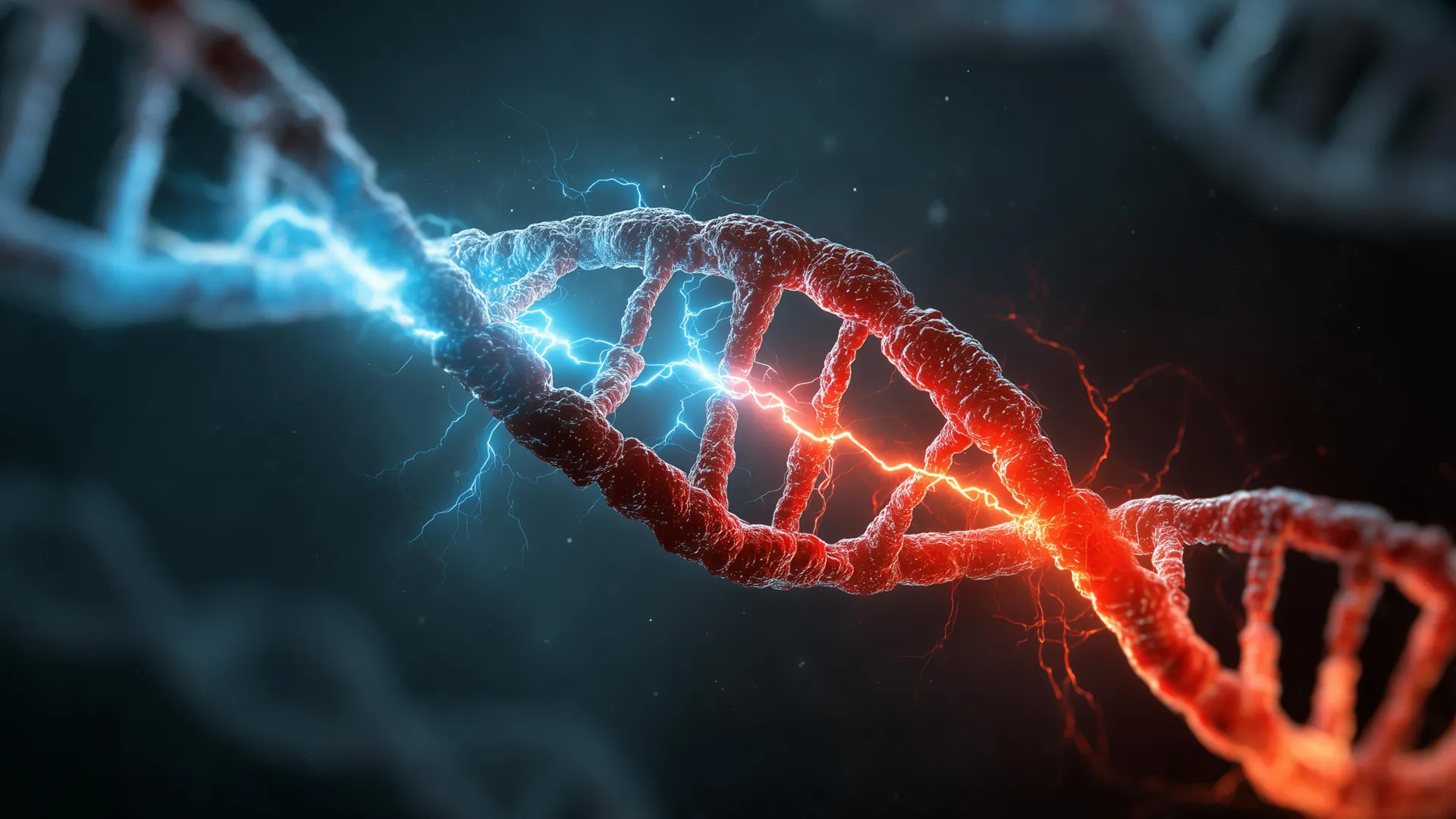
Even with today's advanced DNA sequencing technologies, the underlying genetic causes of many rare movement disorders remain unknown. Researchers in Germany have now uncovered an important new clue. By analyzing 2,811 people with ataxia, hereditary spastic paraplegia, and dystonia, scientists identified harmful variants in a gene called CD99L2 as the cause of X-linked spastic ataxia.
The discovery, published in Nature Communications, helps explain a previously unsolved neurological disorder and offers new insight into how certain neurodegenerative diseases develop.
Researchers Link CD99L2 to Rare Neurological Disease
Before this study, CD99L2 was mainly recognized for its role in the immune system. No neurological function had been established for the gene.
Using a combination of genome-wide genetic analysis and laboratory experiments in cells, the research team demonstrated that CD99L2 is also essential for communication pathways within nerve cells. Their findings revealed that the gene plays a critical role in maintaining normal neuronal signaling.
How the Gene Affects Brain Cell Function
Scientists at Ruhr University Bochum found that the protein produced by CD99L2 works as an activating partner for CAPN1, a calcium-dependent protease already known to be involved in hereditary spastic paraplegia and ataxia.
"Disease-causing variants lead to disrupted production of the CD99L2 protein in the cell and prevent its interaction with CAPN1," explains Dr. Jonasz Weber. "Patients' cells also showed specific disruptions of synaptic processes."
According to the researchers, defects in CD99L2 reduce the activation of CAPN1. This, in turn, disrupts important neuronal signaling pathways, providing a likely explanation for the movement-related symptoms seen in affected patients.
Combining Genetics and Neuroscience
The findings highlight the value of combining genetic testing with functional studies of how genes operate inside cells.
"Our results show that genetic diagnostics and functional neuroscience are not mutually exclusive areas," says Weber. "Only when both disciplines work closely together can a reliable disease mechanism be derived from a genetic variant."
Identifying CD99L2 as a disease-causing gene could improve genetic diagnosis for people with rare movement disorders. It also provides researchers with new information about the biological processes involved in neurodegeneration.
What Is Spastic Ataxia?
Spastic ataxia is a group of rare neurodegenerative disorders characterized by problems with movement coordination (ataxia) together with spastic paralysis. The symptoms result from damage affecting the cerebellum and motor pathways within the central nervous system.
The age at which symptoms appear and the progression of the disease can vary widely depending on the underlying genetic cause.
The large-scale genetic analysis of the patient cohort was carried out in Tübingen under the supervision of Dr. Tobias Haack. Functional studies of the newly identified disease gene were led by Dr. Jonasz Weber and colleagues at the Department of Human Genetics at Ruhr University Bochum.
Story Source:
Materials provided by Ruhr-University Bochum. Note: Content may be edited for style and length.
Journal Reference:
- Benita Menden, Rana D. Incebacak Eltemur, German Demidov, Marc Sturm, Joohyun Park, Chrisovalantou Huridou, Florian Fath, Astrid Nümann, Alexander Baumann, Illja J. Diets, Claudia Dufke, Martin Regensburger, Maria Rönnefarth, Vera Wilke, Nienke van Os, Stefan Vielhaber, Tim W. Rattay, Zacharias Kohl, Susana Peralta, Priscila Pereira Sena, Melanie Kellner, Nadine Weissert, Andreas Traschütz, Lena Zeltner, Kai Boelmans, Natalie Deininger, Leon Schütz, Caspar Gross, Ana Beatriz Hinojosa Amaya, Katrin Raupach, Holger Hengel, Florian Harmuth, Jakob Admard, Ingrid Bader, Sarah Baumann, Friedemann Bender, Andrea Bevot, Almut Bischoff, Felix Boschann, Rebecca Buchert, Daniel Buchzik, Nicolas Casadei, Claudia B. Catarino, Isabell Cordts, Kirsten Cremer, Marion Doebler-Neumann, Nadja Ehmke, Miriam Elbracht, Ruth J. Falb, Thomas Feindt, Zofia Fleszar, Lea Gerstner, Dieter Gläser, Ute Grasshoff, Sarah Grosch, Kathrin Grundmann, Alexander Gutschalk, Manja Haaga, Stefanie Hayer, Ute Hehr, Yorck Hellenbroich, Wolfram Henn, Barbara Herr, Rebecca Herzog, Veronka Horber, Jonas Deppe, Nadja Kaiser, Christiane Kehrer, Martin Kehrer, Jan Kern, Christoph Keßler, Katharina Khuller, Hannah Klinkhammer, Urania Kotzaeridou, Peter Krawitz, Martina Kreiss, Hanna Küpper, Alice Kuster, Lucia Laugwitz, Anne Lesemann, Nadine Lichey, Tobias Linden, Boris Macek, Janine Magg, Elisabeth Mangold, Eva Manka, Iris Marquardt, Karl Mehnert, David Mengel, Susanne Morlot, Barbara Oehl-Jaschkowitz, Martje G. Pauly, Melanie Philipp, Florentine Radelfahr, Maren Rautenberg, Angelika Riess, Carsten Saft, Beate Schlotter-Weigel, Axel Schmidt, Eva M. C. Schwaibold, Veronika Spahlinger, Stephanie Spranger, Katharina Marie Steiner, Claudia Stendel, Andreas Thieme, Andreas Tzschach, Ana Velic, Sarah Wiethoff, Carlo Wilke, Stephan Züchner, Simone Zittel, Nienke van Os, Bart van de Warrenburg, Ralf A. Husain, Marcus Deschauer, Felix Distelmaier, Andreas Dufke, Holm Graessner, Bernhard Hemmer, Heike Jacobi, Thomas Klockgether, Thomas Klopstock, Xenia Kobeleva, Georg-Christoph Korenke, Alma Kuechler, Gregor Kuhlenbäumer, Ingo Kurth, Huu Phuc Nguyen, Gilbert Wunderlich, Kirsten E. Zeuner, Stephan Klebe, Michaela Auer-Grumbach, Michaela Butryn, Jürgen Winkler, Dagmar Timmann, Matthis Synofzik, Bart van de Warrenburg, Rebecca Schüle, Ludger Schöls, Stephan Ossowski, Olaf Riess, Jonasz J. Weber, Tobias B. Haack. Loss-of-function variants in the CAPN1 activator CD99L2 cause X-linked spastic ataxia. Nature Communications, 2026; 17 (1) DOI: 10.1038/s41467-026-69337-9
Cite This Page: