
MIT scientists discover a hidden switch that helps colon cancer spread
- Date:
- November 28, 2026
- Source:
- Massachusetts Institute of Technology
- Summary:
- Scientists have discovered a hidden biological pathway that allows colon cancer to spread and found that a high-fat diet can amplify its activity in mice. Blocking this pathway could offer a powerful new strategy for preventing potentially deadly metastasis.
- Share:
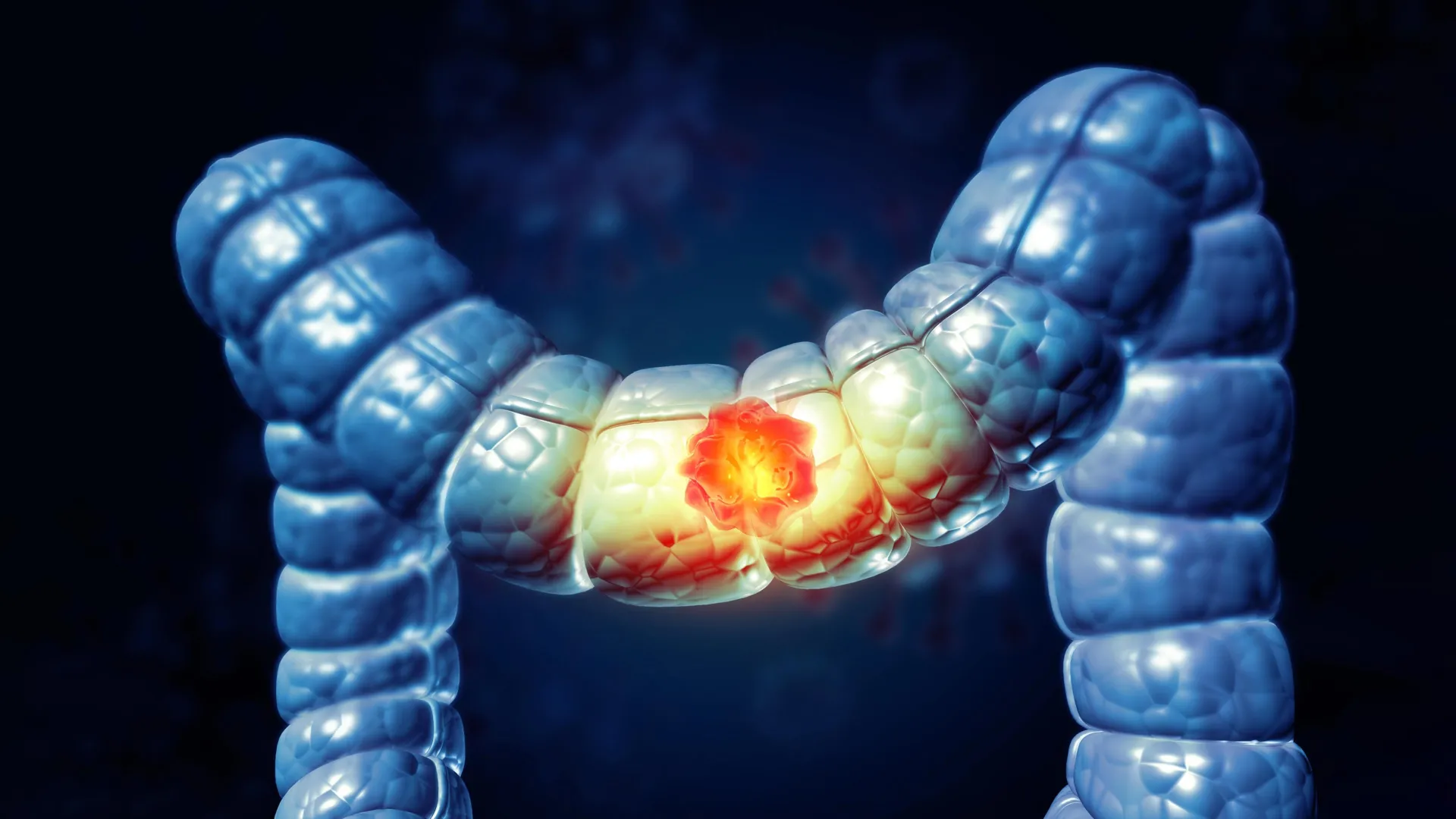
MIT biologists have uncovered a critical mechanism that enables colorectal cancer to spread throughout the body, potentially revealing a new way to prevent the disease's deadliest complication. Most colon cancer deaths occur when tumor cells invade other organs, particularly the liver.
At the center of the discovery is a protein called YAP1, which regulates a biological program that normally helps damaged tissues heal. Cancer cells can hijack this repair mechanism to multiply, move, and establish tumors elsewhere in the body. The researchers also discovered that a high-fat diet can stimulate this process in mice by increasing the production of fatty molecules known as ceramides.
Developing drugs that interfere with ceramide production could provide a new strategy for preventing the spread of cancer, a process known as metastasis, in patients diagnosed with colon cancer.
"We've found a pathway that we think is druggable. If we shut down the enzymes that make ceramides, tumor cells can't switch on this regenerative program, and they largely fail to seed metastases in the liver," says Omer Yilmaz, director of the MIT Stem Cell Initiative, a professor of biology at MIT and a member of MIT's Koch Institute for Integrative Cancer Research. He is also a gastrointestinal pathologist and director of translational research in pathology at Beth Israel Deaconess Medical Center.
The study, published in Science, was led by senior authors Yilmaz; Nilay Sethi, an associate professor of medicine at Harvard Medical School and Dana Farber Cancer Institute; and Alpaslan Tasdogan, head of the Institute for Tumor Metabolism and a professor in the Department of Dermatology at University Hospital Essen and the German Cancer Consortium (DKTK). MIT postdoctoral researchers Swagata Goswami, Qiming Zhang, and Abdullah Burak Yildiz are the study's lead authors.
How Colon Cancer Hijacks the Body's Healing System
Most colon cancer cases in the United States are diagnosed at stage 2 or 3, when the disease has not yet reached distant organs. Although surgery can successfully remove the original tumor, as many as one-third of these patients will later experience a recurrence involving metastatic cancer.
Researchers have uncovered numerous genetic mutations that contribute to the development of colon cancer. However, the biological changes that give tumor cells the ability to escape the colon and establish themselves in other organs have remained much less clear.
"Many studies have looked for a genetic driver of metastasis and come up empty," Yilmaz says. "There isn't a defining mutational signature that separates metastatic cells from the primary tumor, which points to metastasis being driven largely by changes in which genes are switched on and off, rather than by new mutations."
To investigate this possibility, the team focused on epigenetic programs, which regulate gene activity without changing the underlying DNA sequence. The researchers examined tumor organoids, miniature three-dimensional models of tumors grown from cells obtained from patients with colorectal cancer and mouse models representing several forms of colon cancer.
Across these different models, the team identified a common characteristic of metastatic cancer cells: increased activity of the biological program governed by YAP1.
A Molecular Switch That Helps Cancer Spread
YAP1 works alongside other regulatory proteins to activate genes involved in development, tissue regeneration, and the maintenance of stem cells. Under healthy conditions, this program plays an important role during fetal development and helps the body rebuild damaged tissues following an injury.
When the intestine suffers significant damage, a rare population of cells resembling those found during fetal development temporarily emerges to help restore the intestinal lining.
Although scientists have known for years that YAP1 is involved in cancer, the new research reveals how lipids associated with diet can push tumor cells into this unusual regenerative state. It also identifies this cellular state as a critical requirement for metastasis.
"The regenerative program that we described is generally observed in the gut when there is severe injury or infection and the gut needs to regenerate. We see the tumor cells hijack this program to drive metastatic progression," Goswami says.
By activating genes normally associated with healing, cancer cells gain properties that allow them to leave the original tumor and colonize distant parts of the body. The liver is the most frequent destination for metastatic colon cancer, followed by the lungs.
How a High-Fat Diet May Fuel Colon Cancer Spread
The researchers also uncovered a connection between dietary fat and the activity of this cancer-promoting pathway.
Experiments in mice showed that colon cancer cells exhibited substantially greater YAP1 activity when the animals consumed a high-fat diet than when they were fed a healthy diet.
Further investigation revealed that a high-fat diet stimulates enzymes responsible for producing ceramides, a class of fatty molecules known as lipids. These molecules interfere with a regulatory mechanism that ordinarily keeps YAP1 inactive.
Once that molecular restraint is lifted, YAP1 can enter the cell nucleus, where it helps activate genes that drive the regenerative program exploited by cancer cells.
Blocking the Spread of Colon Cancer
To determine whether disrupting this mechanism could prevent metastasis, the scientists genetically targeted either YAP1 itself or genes responsible for ceramide production. Both approaches substantially reduced the ability of colon cancer cells to establish tumors in the livers of mice.
The team then investigated whether the same biological pathway was associated with metastatic disease in humans. Using RNA sequencing data from colorectal cancer patients, the researchers examined patterns of gene activity in human tumors.
They found that the YAP1 program was more active in metastatic cancer cells. Patients with a higher body mass index (BMI) also exhibited greater activity of YAP1-regulated genes than patients of normal weight. Higher expression of these genes was associated with poorer survival.
"We don't think that the YAP1 program is specific to obesity. It's just that it becomes accentuated in obesity, and that may account for why obesity is known to drive the progression of colorectal cancer," Yilmaz says.
A Potential New Treatment for Colorectal Cancer
The researchers now hope to develop drugs that block the activity of DEGS1 and DEGS2, two enzymes involved in ceramide production. By interfering with the production of these fatty molecules, the drugs could potentially prevent cancer cells from activating the regenerative program they need to spread.
However, the scientists emphasize that their findings are not yet sufficient to support dietary recommendations for people already diagnosed with colon cancer.
Developing a safe and effective treatment also presents an important challenge. Ceramides perform essential functions in healthy tissues, meaning that any drug designed to interfere with their production would need to act with considerable selectivity.
The research was funded by the National Institutes of Health/National Cancer Institute, the MIT Stem Cell Initiative, a Koch Institute Frontier grant, and the NRW Junior Research Program.
Story Source:
Materials provided by Massachusetts Institute of Technology. Original written by Anne Trafton. Note: Content may be edited for style and length.
Journal Reference:
- Swagata Goswami, Qiming Zhang, Abdullah Burak Yildiz, Upasana Das Adhikari, Akhouri Kishore Raghawan, Manon Bulliard, Sabhyata Sedhain, Odai Darawshi, Cigdem Elif Celik, Feyza Cansiz, Constantin P. Krempe, Jonas Rösler, Gabriele Allies, Sven W. Meckelmann, Chiashin Chi, Felix-Levin Hormann, Sven Heiles, Joseph Sedlak, Wesley Grace, George Eng, Ethan Reich, Chiara Alquati, Kevin J. Williams, Benjamin J. Read, Edrees H. Rashan, Zhixin Li, Anup Jnawali, Jose A. Ortiz, Chesta Jain, Charles A. Whittaker, Osman H. Yilmaz, Vikram Deshpande, Oliver J. Schmitz, Albert Sickmann, Autumn G. York, Douglas S. Kwon, Ulf Neumann, Maria Fedorova, Matthew G. Vander Heiden, Besim Ogretmen, Nilay S. Sethi, Alpaslan Tasdogan, Ömer H. Yilmaz. Ceramide synthesis mediates colorectal cancer metastasis through a YAP-driven regenerative program. Science, 2026; 393 (6818) DOI: 10.1126/science.adw8520
Cite This Page: