
A shocking amount of plastic is floating in city air
- Date:
- January 12, 2026
- Source:
- Chinese Academy of Sciences Headquarters
- Summary:
- Plastic pollution is not just in oceans and soil. Scientists have now found enormous amounts of microscopic plastic floating through urban air, far exceeding earlier estimates. Road dust and rainfall play a major role in moving these particles through the atmosphere. The findings suggest the air may be one of the most important pathways for plastic pollution.
- Share:
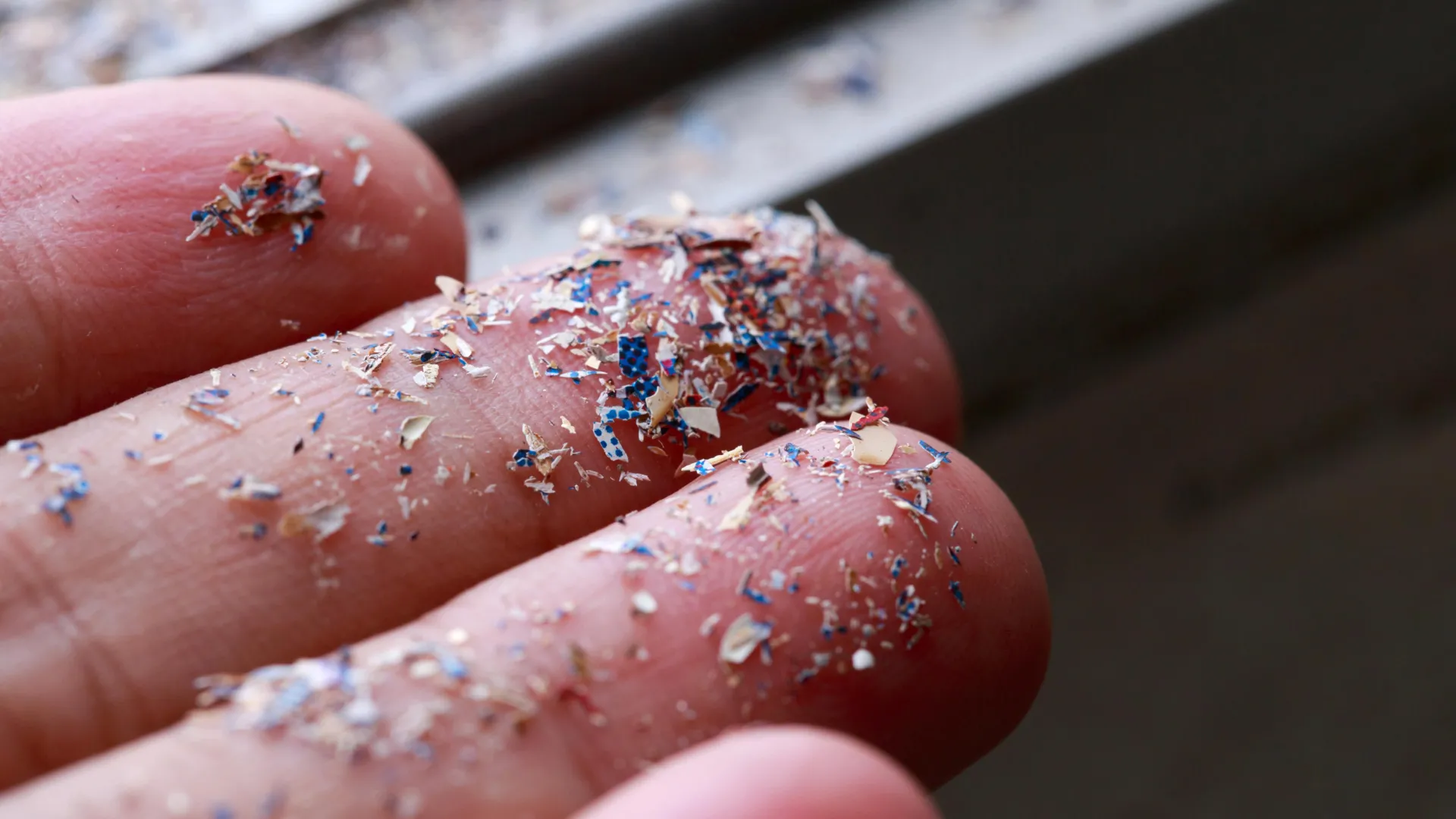
Over the past 20 years, scientists have increasingly identified microplastics (MPs) and nanoplastics (NPs) as a growing form of environmental pollution. These tiny plastic particles have been detected throughout all major parts of the Earth system, including the atmosphere, hydrosphere, lithosphere, and biosphere.
Their widespread distribution has made plastics a rising concern for researchers studying biogeochemical cycles and climate change. Even so, many basic questions remain unresolved. Scientists still lack precise measurements of how much plastic exists, where it originates, how it changes in the environment, and where it ultimately accumulates. These gaps are especially pronounced in the atmosphere, largely because current methods struggle to reliably detect and analyze particles that range from microscopic to nanoscale sizes.
New Tools Reveal Plastic in Urban Air
To overcome these measurement challenges, researchers from the Institute of Earth Environment of the Chinese Academy of Sciences (IEECAS) developed a semi automated microanalytical technique designed to quantify plastic particles in the atmosphere. The method also tracks how plastics move between different environmental pathways, including airborne particles, dustfall, rain, snow, and dust resuspension.
The team applied this approach in two major Chinese cities, Guangzhou and Xi'an. Their system relies on computer controlled scanning electron microscopy, which reduces human bias compared with traditional manual inspection methods. This allowed the researchers to identify plastic particles more consistently and across a broader size range.
Plastic Levels Far Higher Than Earlier Estimates
Using this automated approach, the researchers found that plastic concentrations in total suspended particulates (TSP) and dustfall fluxes were two-six orders of magnitude higher than levels previously reported using visual identification methods (e.g., manual SEM-EDX, μ-FTIR, or μ-Raman). These findings suggest that earlier studies may have significantly underestimated how much plastic is present in the air.
The estimated movement of MPs and NPs also differed widely across atmospheric pathways, varying by two-five orders of magnitude. This variation was driven largely by road dust resuspension and wet deposition. In addition, samples collected from deposition contained more unevenly mixed plastic particles than those taken from aerosols or resuspended dust. This pattern points to increased particle clumping and removal as plastics travel through the atmosphere.
Why Atmospheric Plastics Matter
The study marks the first time nanoplastics as small as 200 nm have been detected within complex environmental samples. It also delivers a detailed quantitative picture of plastics in the atmosphere, which remains the least understood reservoir in the global plastic cycle.
By clarifying how plastics move through the air, transform during transport, and are eventually removed, the research offers new insight into their potential effects on climate processes, ecosystem health, and human well being.
These findings were published in Science Advances on January 7.
Story Source:
Materials provided by Chinese Academy of Sciences Headquarters. Note: Content may be edited for style and length.
Journal Reference:
- Tafeng Hu, Chongchong Zhang, Yuqing Zhu, Jing Duan, Suixin Liu, Niu Jin, Yingpan Song, Feng Wu, Jianjun Li, Ting Zhang, Hongya Niu, Xuxiang Li, Hong Huang, Gary S. Casuccio, Yu Huang, Kin-Fai Ho, Junji Cao, Daizhou Zhang. Abundance of microplastics and nanoplastics in urban atmosphere. Science Advances, 2026; 12 (2) DOI: 10.1126/sciadv.adz7779
Cite This Page: