
High blood sugar may help cancer cells hide from the immune system
Scientists found that high blood sugar may help cancer cells hide behind a sugary shield, revealing a potential new way to strip away their defenses.
- Date:
- August 31, 2026
- Source:
- Sanford Burnham Prebys
- Summary:
- Researchers discovered a possible way cancer cells hide from the immune system: they build a thick, sugar-rich coating around themselves. High blood sugar can strengthen this protective shield under conditions that resemble the environment inside tumors, with the protein HSF1 playing a key role. Blocking this process could make cancer cells easier for the immune system to recognize and destroy.
- Share:
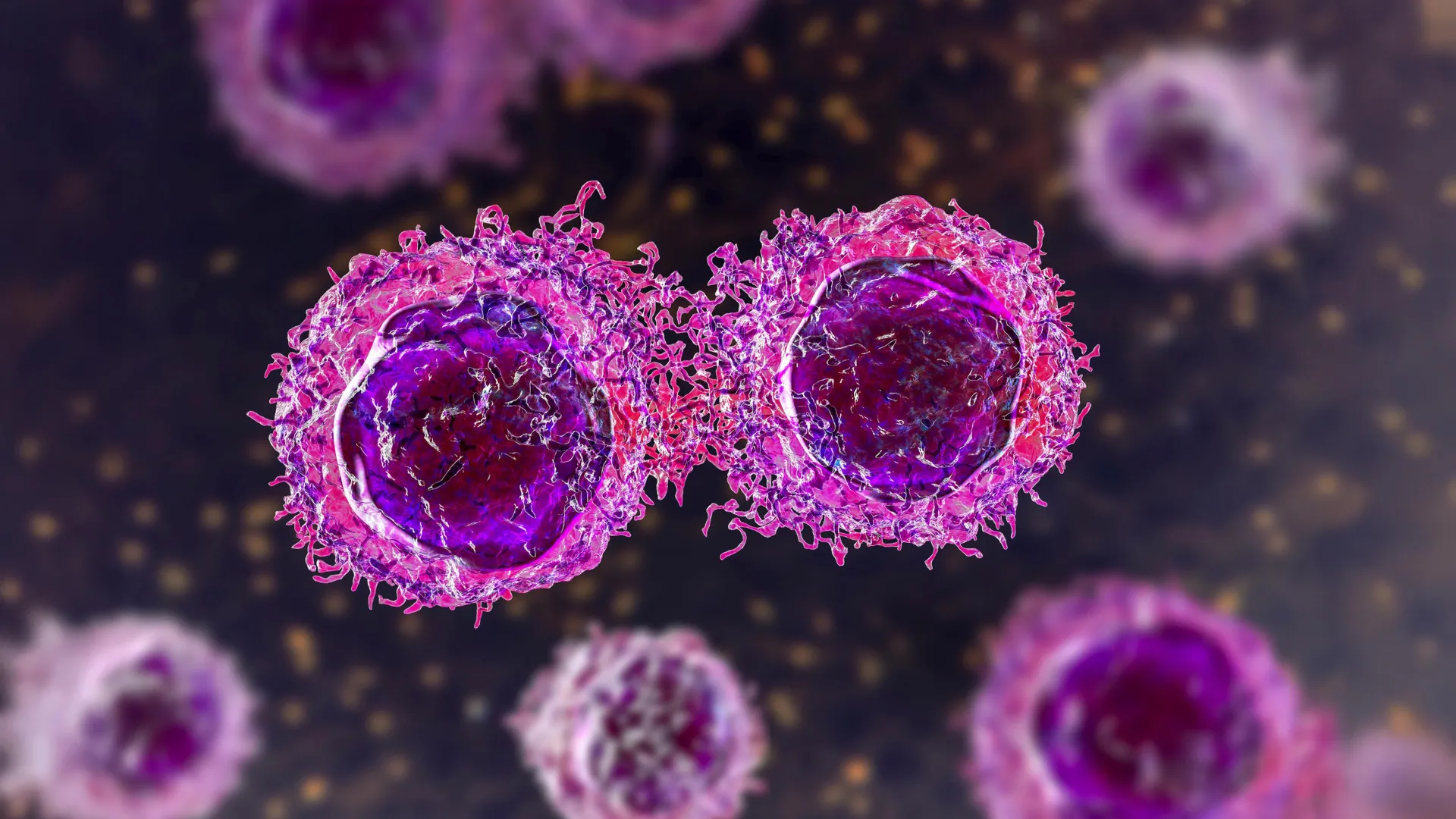
Cancer cells can sometimes evade the immune system by surrounding themselves with a dense layer of sugar-derived molecules. This coating can act as a form of camouflage, making it harder for immune cells to recognize and destroy them.
Researchers at Sanford Burnham Prebys Medical Discovery Institute and collaborating institutions across North America have now identified environmental conditions that can help cancer cells build this protective layer. Their findings, published August 7, 2026, in Science Advances, suggest that changes within the tumor microenvironment, the surrounding mixture of immune cells, connective tissue, blood vessels, proteins and carbohydrates, can influence how effectively cancer cells conceal themselves.
The researchers also identified a potential way to reduce this sugar-rich coating, potentially making cancer cells easier for the immune system to detect and eliminate.
How the Tumor Environment Changes Cancer Cells
Lead and corresponding author Kevin Tharp, PhD, had previously studied how physical pressure on cells can cause unexpected changes in mitochondrial function. He realized that tumors provide an ideal setting for investigating these effects because cancer cells are often subjected to significant mechanical forces.
"Primary tumors are typically stiffer than their surrounding tissue," said Tharp, assistant professor in the Cancer Metabolism and Microenvironment Program at the Sanford Burnham Prebys NCI-Designated Cancer Center. "This led me to hypothesize that the biophysical properties of cells influence the altered metabolic programs that everyone observes in tumors."
One metabolic change commonly associated with tumors is reduced oxidative metabolism of glucose. Previous research has shown that this shift can depend on which nutrients are available around the cells, meaning it is not necessarily an inherent feature of tumor cells themselves.
To investigate further, Tharp and his colleagues exposed cells to abundant glucose while growing them under several different conditions.
Some cells were placed in stiff environments designed to resemble the physical conditions surrounding primary tumors. Others were grown in softer environments that more closely resemble normal tissue.
The researchers also divided the cells according to the type of culture medium in which they were grown. One was a standard laboratory medium, while the other was formulated to more closely match the nutrient composition found in the human body. Both types were tested under normal and elevated glucose conditions, allowing the researchers to simulate hyperglycemia.
High Glucose Can Thicken Cancer's Sugar Coating
These environmental differences produced notable changes in the proteins made by the cells, the concentrations of metabolites inside them, and the thickness of the sugar-derived layer covering their surfaces. This protective coating is known as the glycocalyx.
Importantly, excess glucose increased the thickness of the glycocalyx only when cells were grown in the physiological medium that more closely represented conditions inside the human body.
"We observed that changing the physiological media composition and changing the available metabolites for those tumor cells reveals distinct biology for normal and tumor cell metabolism," said Tharp.
The researchers next investigated exactly how these metabolic changes affected the glycocalyx.
The glycocalyx is built from carbohydrates attached to proteins or lipids. These structures are known as glycoconjugates. Because glucose supplies some of the raw material needed to produce glycoconjugates, the team suspected that changes in glucose metabolism or hyperglycemia might alter how this protective layer is assembled.
"We found stark separation between the glycoconjugates of cells cultured in conventional medium versus those cultured in a medium that better reflects the nutrient composition of the human body," said Tharp.
The researchers also found that hyperglycemia changed the composition of glycoconjugates produced by the cells.
HSF1 Emerges as a Key Player
To understand why excess glucose was associated with a thicker glycocalyx, the researchers examined which proteins became more abundant when cells were exposed to hyperglycemia.
Their experiments highlighted heat shock factor 1 (HSF1), a protein best known for helping cells survive high temperatures and other forms of stress. Previous research has also linked HSF1 to the progression and metastasis of breast cancer.
The team showed that whether HSF1 was present or absent changed the composition of glycoconjugates produced by the cells.
Researchers then examined the relationship among hyperglycemia, HSF1, the tumor microenvironment, and the immune system's ability to attack cancer cells.
They found that hyperglycemia enhanced cancer cells' ability to escape immune detection only when HSF1 was present and the cells were grown under conditions resembling the tumor microenvironment.
The findings suggest that drugs designed to target HSF1 could potentially reduce the thickness of the glycocalyx, stripping away some of the protection that allows cancer cells to avoid immune surveillance.
Stripping Away Cancer's Protective Shield
"Our findings indicate that changes in mitochondrial function lead to the synthesis of cell surface sugar-derived molecules that make it difficult for the immune system to recognize and kill cancer cells," said Tharp. "Now that we know this, this creates an enormous drug discovery opportunity to take away the surface coating that protects them from immune surveillance.
"And we think this will be a really effective strategy to attack metastatic disease and improve immunotherapy responses."
The research could have particular relevance as metabolic syndrome and type 2 diabetes become increasingly common. Both conditions can involve hyperglycemia, which Tharp notes is becoming a more important risk factor for people with cancer.
A substantial body of previous research has connected high blood sugar with both an increased risk of developing cancer and worse outcomes following cancer treatment. However, considerably fewer studies have investigated the biological mechanisms that might explain the relationship.
The new findings offer one possible explanation by showing how elevated glucose could directly help tumors escape immune attack.
"What we found is a plausible mechanism by which hyperglycemia directly contributes to immune evasion," said Tharp.
"And potentially a way to take away a pro-tumor advantage from hyperglycemia caused by metabolic syndrome and modern diets."
Additional Authors and Study Support
Additional authors include:
- Valerie M. Weaver, PhD, professor and director of the Center for Bioengineering and Tissue Regeneration at the University of California San Francisco
- Kyle Alvarez, Allen Lee, Joseph A. Rhodenhiser and Sanju Sinha at Sanford Burnham Prebys
- Sangwoo Park at Cornell University
- Greg A. Timblin, Alicia L. Richards, Erica Stevenson, Kimberly Tsui, Nadia Ayad, Andrew Dillin, Nevan. J. Krogan and Danielle L. Swaney at the University of California San Francisco
- Jordan A. Berg at the University of Utah
- Nicholas M. Twells and Lara K. Mahal at the University of Alberta
- Nicholas M. Riley, Egan L. Peltan, D. Judy Shon and Carolyn R. Bertozzi at Stanford University
- Francesco Palomba and Michelle Digman at the University of California Irvine
- Austin E. Y. T. Lefebvre at Calico Life Sciences
- Ross W. Soens and Jason R. Cantor at the University of Wisconsin-Madison
- Jaya L. Thangaraj and Dan S. Kaufman at the University of California San Diego
- Johanna ten Hoeve at the University of California Los Angeles
- Kevin Healy at the University of California Berkeley
- Matthew J. Paszek at the University of California Davis
The study was supported by the National Institutes of Health, National Cancer Institute, National Foundation for Cancer Research, Canada Excellence Research Chair in Glycomics and Ovarian Cancer Research Alliance.
Story Source:
Materials provided by Sanford Burnham Prebys. Note: Content may be edited for style and length.
Journal Reference:
- Kevin M. Tharp, Sangwoo Park, Greg A. Timblin, Alicia L. Richards, Jordan A. Berg, Nicholas M. Twells, Nicholas M. Riley, Kyle Alvarez, Allen Lee, Egan L. Peltan, D. Judy Shon, Erica Stevenson, Kimberly Tsui, Francesco Palomba, Austin E. Y. T. Lefebvre, Ross W. Soens, Jaya L. Thangaraj, Nadia M.E. Ayad, Joseph A. Rhodenhiser, Johanna ten Hoeve, Kevin Healy, Michelle Digman, Andrew Dillin, Nevan J. Krogan, Carolyn R. Bertozzi, Dan S. Kaufman, Sanju Sinha, Danielle L. Swaney, Lara K. Mahal, Jason R. Cantor, Matthew J. Paszek, Valerie M. Weaver. The microenvironment dictates glyco-immune surveillance via HSF1-mediated metabolism. Science Advances, 2026; 12 (32) DOI: 10.1126/sciadv.aeb1136
Cite This Page: